
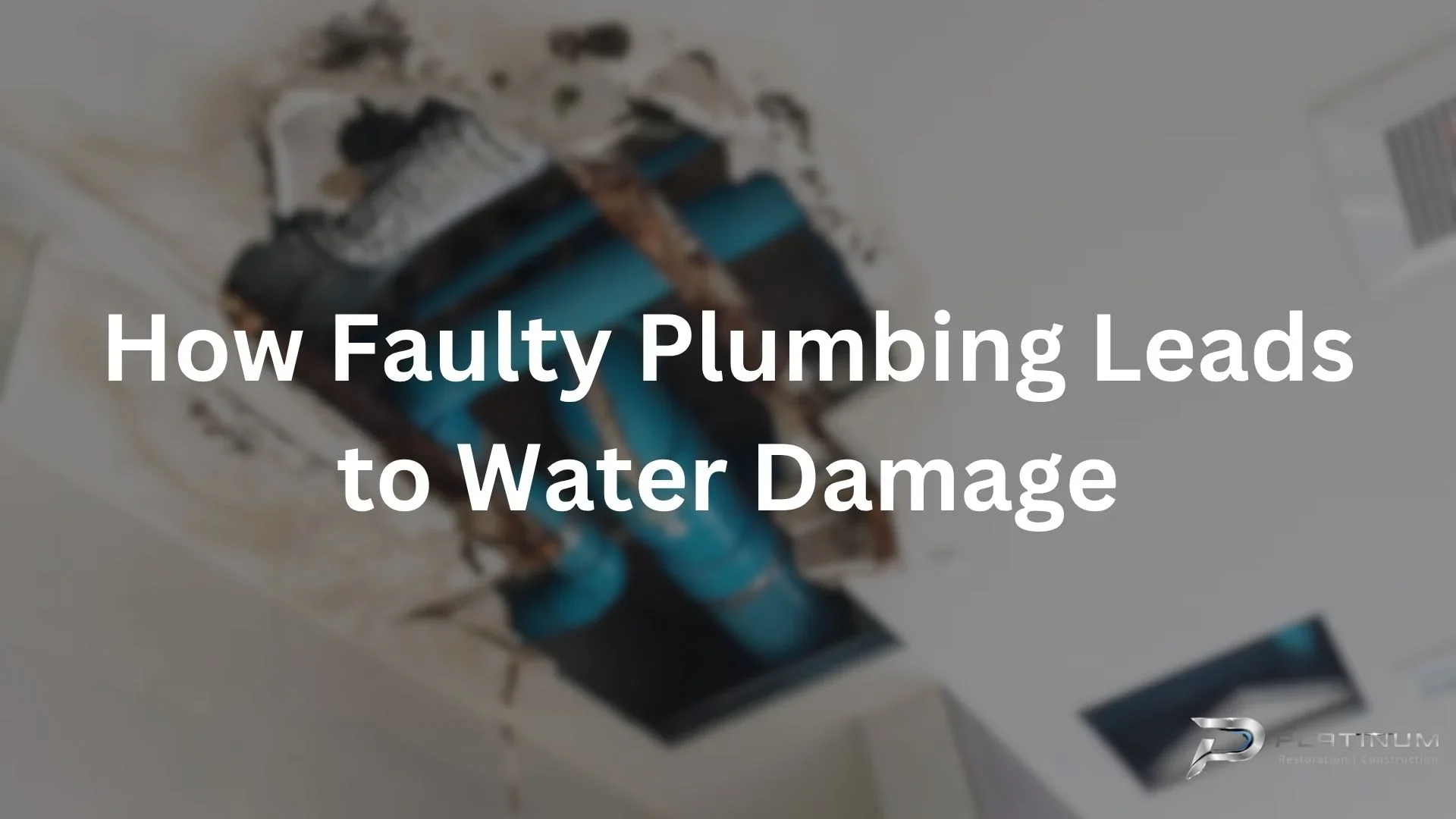
Plumbing problems rarely announce themselves with a dramatic burst pipe flooding a room in an instant. More often, faulty plumbing causes water damage gradually, through small failures that go unnoticed until they’ve already caused significant damage. Understanding the specific ways plumbing fails, including factors unique to this region, helps homeowners catch problems before they escalate into major restoration projects.
This guide covers the main categories of plumbing failure that lead to water damage, including DIY mistakes that contribute more often than people expect, along with DFW-specific factors that affect local plumbing systems.
Category 1: Aging and Deteriorating Pipes
Pipes don’t fail suddenly in most cases, they deteriorate gradually until a weak point finally gives way.
- Galvanized steel pipes, common in homes built before the 1960s, corrode from the inside out over decades, eventually restricting flow or developing pinhole leaks
- Older copper pipe can develop pinhole leaks from a phenomenon called pitting corrosion, particularly in areas with certain water chemistry
- Cast iron pipes, common in some older home drain systems, can crack or corrode over time, leading to slow leaks that are easy to miss since they’re often located in less visible areas
- Polybutylene pipe, used in some homes built between the 1970s and 1990s, has a documented history of premature failure and is a significant risk factor in homes of that era
Pipe age alone doesn’t guarantee failure, but homes with original plumbing from several decades ago carry meaningfully higher risk, particularly if that plumbing has never been inspected or partially updated.
Category 2: Failed Connections and Fittings
Where pipes connect to fixtures, appliances, or other pipe sections represents a common failure point that’s often more preventable than full pipe deterioration.
- Supply line connections at toilets, sinks, and appliances can loosen or degrade over time, particularly with rubber or plastic components that have a shorter lifespan than the pipes themselves
- Compression fittings and soldered joints can develop small leaks as materials expand and contract with temperature changes over years of use
- Water heater connections, given the temperature cycling involved, are particularly prone to connection wear over time
- Washing machine supply hoses, especially older rubber ones, are a well-documented source of sudden, significant water damage when they fail
Category 3: Fixture and Appliance-Related Plumbing Failures
Plumbing failures aren’t limited to pipes themselves, fixtures and the appliances connected to them contribute significantly to water damage incidents.
- Toilet wax ring failures allow water to seep at the base of the toilet, often going unnoticed until flooring damage becomes apparent
- Dishwasher and washing machine internal plumbing components can fail gradually, producing small leaks before a complete failure occurs
- Water heater tank failures, whether from age or sediment buildup, can range from slow leaks to complete tank ruptures
- Garbage disposal connections and seals can degrade over time, leading to leaks under the kitchen sink that go unnoticed in a rarely inspected cabinet space
Category 4: Installation Errors and DIY Plumbing Mistakes
Not every plumbing failure traces back to aging materials, a meaningful share comes from improper installation or well-intentioned DIY work that didn’t account for proper technique.
- Over-tightened or under-tightened connections during DIY appliance installation can create leaks that aren’t immediately apparent
- Improper pipe sizing or incompatible material connections, such as mixing certain metal types without proper fittings, can accelerate corrosion at the connection point
- Skipped permits or inspections on DIY plumbing work mean potential issues go unidentified by a professional who might have caught them during installation
- Accidental pipe damage during unrelated home improvement projects, such as driving a nail or screw through a wall without checking for plumbing behind it, is a surprisingly common cause of sudden leaks
DFW-Specific Factors Affecting Local Plumbing
A few regional factors specifically influence how plumbing systems in this area age and fail.
- North Texas’s hard water, with higher mineral content than many regions, contributes to scale buildup inside pipes over time, which can accelerate wear at connection points and reduce flow efficiency
- Clay-heavy soil throughout the region expands and contracts significantly with moisture changes, which can put stress on underground plumbing lines and contribute to misalignment or cracking over years
- The area’s occasional hard freezes, while infrequent, catch plumbing systems that weren’t built with the same freeze protection standard as consistently cold climates, making pipe insulation a relevant local consideration
- Older neighborhoods throughout Dallas-Fort Worth, particularly those built before more modern plumbing material standards, carry a higher concentration of homes with original galvanized or early copper plumbing nearing the end of its expected lifespan
| Failure Category | Typical Warning Sign | Prevention Approach |
|---|---|---|
| Aging pipes | Discoloration, reduced water pressure | Periodic inspection, proactive replacement |
| Failed connections | Visible moisture, corrosion at joints | Replace supply hoses proactively every 5 years |
| Fixture/appliance failures | Water pooling near base or under appliance | Regular visual checks behind/under fixtures |
| Installation errors | Leaks appearing shortly after DIY work | Professional inspection after DIY plumbing |
A Real Example of a DFW-Specific Factor Causing Failure
A homeowner in Arlington experienced a slow leak behind a kitchen wall that was eventually traced to a copper pipe joint that had developed pitting corrosion, a pattern our team has seen more frequently in homes supplied by certain municipal water sources in the area with specific water chemistry characteristics. The homeowner had no history of plumbing issues and hadn’t considered their home’s copper pipes, installed when the house was built roughly 25 years earlier, to be at particular risk.
By the time the leak was discovered through a water stain on an adjoining wall, it had been active long enough to cause damage requiring removal of a section of drywall and insulation, along with repair of the affected pipe joint. During our assessment, we identified two additional joints showing early signs of similar pitting, which the homeowner opted to have proactively repaired rather than waiting for them to fail independently.
This case illustrates how a regional water chemistry factor, not something the homeowner could have anticipated through general home maintenance knowledge, contributed directly to an otherwise well-maintained home’s plumbing failure.
Why Understanding the Cause Matters for Prevention
Treating every plumbing leak as an isolated, random event misses the pattern that often connects multiple failures within the same home. If pitting corrosion caused one joint to fail, as in the Arlington example, nearby joints installed at the same time with the same materials are plausibly at similar risk, making a broader inspection worthwhile rather than addressing only the immediately obvious problem.
Platinum Service Group is a family-owned business with more than 20 years of experience serving Dallas-Fort Worth and the surrounding North Texas area. Our team holds IICRC, ACAC, and NADCA certifications and is available 24/7 to assess water damage from any plumbing-related cause, identifying not just the immediate source but any related vulnerabilities that might lead to a repeat incident.
Frequently Asked Questions
How do I know if my home has outdated or risky plumbing material?
Homes built before the 1960s may have galvanized steel, while those built between the 1970s and 1990s sometimes have polybutylene pipe, both of which carry elevated failure risk. A plumber can identify your home’s specific pipe material if you’re unsure.
Does DFW’s hard water really affect pipe lifespan?
Yes, mineral buildup from hard water can contribute to reduced flow and accelerated wear at pipe connections over time, which is a relevant factor for homes in this region specifically.
Can accidentally damaging a pipe during a DIY project really cause major water damage?
Yes, a pipe punctured during unrelated work, such as hanging a shelf, can create a leak that goes unnoticed until it’s caused significant damage, particularly if the puncture is small and the leak develops slowly.
Should I have my plumbing inspected even without any current symptoms?
For homes with original plumbing from several decades ago, or those with a known history of similar issues in the area, a proactive inspection can catch developing problems before they result in water damage.
Is it normal for one pipe joint failure to mean others might fail too?
If the failure was caused by a systemic factor, like water chemistry-related corrosion or aging material common throughout the home’s original installation, yes, nearby or similarly-aged connections may share the same vulnerability.
Faulty plumbing causes water damage through a range of mechanisms, from gradual pipe deterioration to installation errors and DFW-specific factors like hard water and clay soil movement. Recognizing these patterns, rather than treating each leak as an unconnected event, supports more effective prevention and catches related vulnerabilities before they become the next incident.