
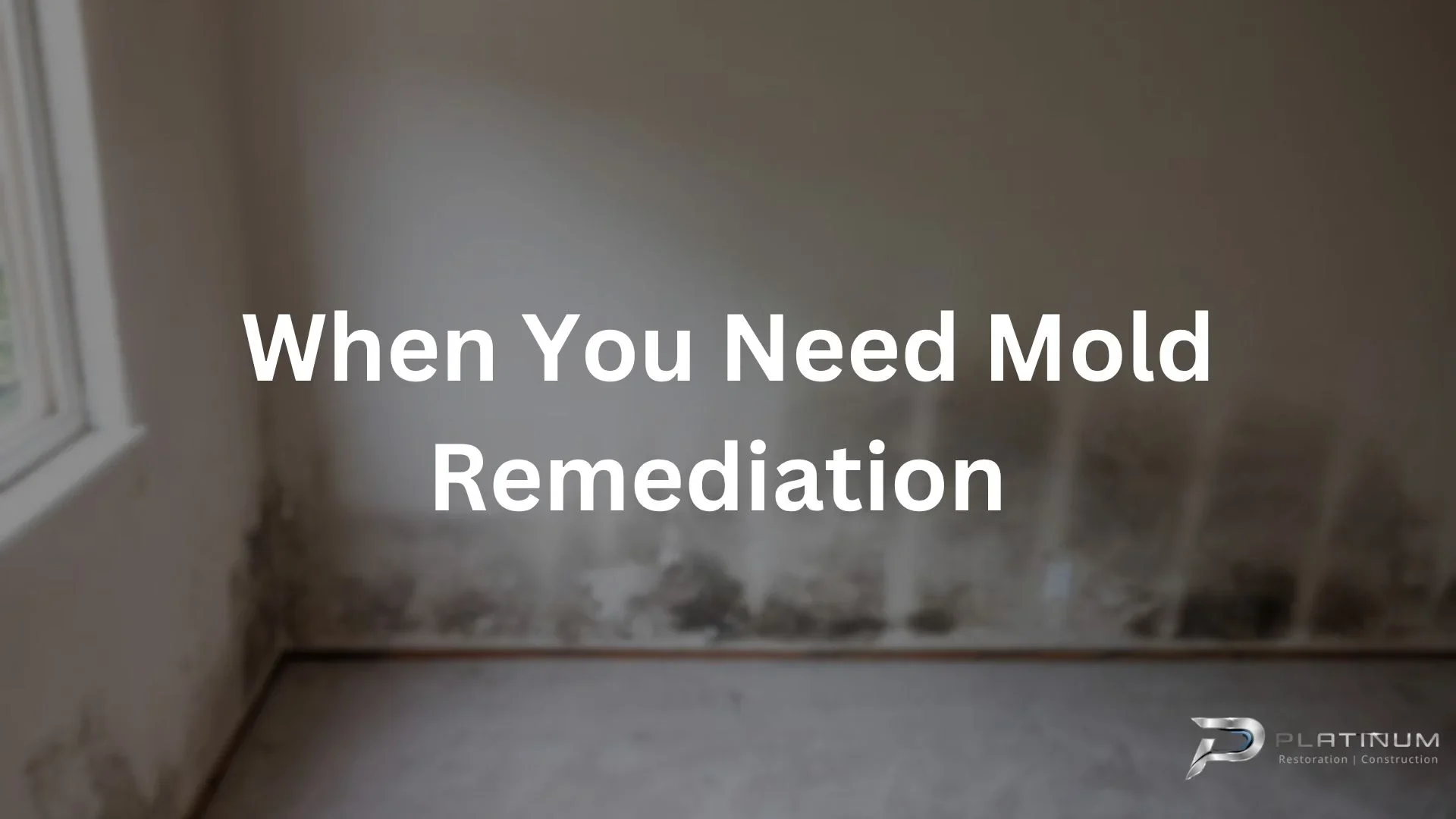
Not every spot of mold calls for professional remediation, but knowing where that line actually sits isn’t always obvious. A small patch on a bathroom tile is a different situation than mold discovered inside a wall cavity, and understanding the distinction helps you respond appropriately rather than either overreacting to something minor or underestimating something that needs real attention.
This guide walks through the clearest signs that professional mold remediation is the right call, along with a practical threshold for when a situation is reasonably manageable yourself versus when it’s time to bring in a certified team.
Sign 1: The Affected Area Exceeds About 10 Square Feet
Size is one of the most reliable indicators for deciding between DIY cleanup and professional remediation.
- A patch smaller than roughly 10 square feet, about the size of a small bathroom rug, on a non-porous surface like tile or glass, is generally manageable with household cleaning products
- Anything larger than that threshold increases the likelihood that spores have spread beyond what’s visible, and DIY cleaning risks disturbing and spreading them further rather than containing the problem
- This guideline isn’t an exact science, but it’s a widely used reference point that reflects when professional containment procedures become more important than simple surface cleaning
If you’re unsure whether an area exceeds this threshold, erring toward professional assessment is the safer choice, particularly given how easily mold spreads once disturbed.
Sign 2: Mold Found Inside Walls, Under Flooring, or in HVAC Systems
Visible surface mold is one thing, mold discovered in places that require demolition or specialized access to even see is a different category entirely.
- Mold inside a wall cavity typically indicates a moisture source that’s been active long enough to establish real growth, not just surface condensation
- Mold under flooring often means the subfloor material itself has absorbed water and may need replacement, not just surface treatment
- Mold in HVAC ductwork is a particular concern since it can circulate spores throughout a building every time the system runs
- These locations require professional assessment both to properly remove the mold and to identify why moisture reached that area in the first place
DIY cleaning simply isn’t practical for these locations, since reaching the affected material usually requires removing building components that a homeowner typically isn’t equipped to safely take apart and reassemble.
Sign 3: Mold That Keeps Returning After Cleaning
A mold patch that reappears shortly after you’ve cleaned it is one of the clearer signs that the underlying moisture issue hasn’t actually been resolved.
- Recurring mold in the same spot, even after what seemed like thorough cleaning, usually means the moisture source is still active
- Cleaning visible mold without addressing the moisture behind it is a temporary fix, and spores left behind will regrow quickly once conditions allow
- This pattern often indicates the mold has established itself more deeply than surface cleaning can fully address, even if the affected area itself is small
Sign 4: Persistent Musty Odor Without Visible Mold
Smell without a visible source is one of the more frustrating situations, but it’s a genuine sign worth investigating rather than dismissing.
- A consistent musty smell that doesn’t go away with normal cleaning often indicates mold growing somewhere out of sight, such as inside a wall or under flooring
- This scenario specifically calls for professional inspection, since locating hidden mold without visible clues requires moisture mapping and sometimes targeted investigation behind walls or under materials
- Ignoring a persistent odor because there’s nothing visible to point to often means the underlying growth continues developing undetected
Sign 5: Known Water Damage History With No Follow-Up Mold Check
Even without current visible symptoms, a property with a past water damage event that wasn’t followed by professional drying confirmation carries elevated risk.
- If a past leak or flood was cleaned up without confirmed complete drying, hidden mold may have developed without producing obvious symptoms yet
- This is particularly relevant for homes that experienced DIY cleanup after a water event, since consumer equipment often can’t verify complete drying the way professional moisture meters can
- A proactive mold inspection in these cases can catch a developing problem before it produces the more obvious signs covered above
| Sign | DIY Appropriate? | Why |
|---|---|---|
| Small patch under 10 sq ft, non-porous surface | Usually yes | Limited spread risk, surface-level |
| Mold inside walls/flooring/HVAC | No | Requires access and containment expertise |
| Mold returning after cleaning | No | Indicates unresolved moisture source |
| Musty smell, no visible mold | No | Requires professional inspection to locate |
| Past water damage, no mold check | Recommend inspection | Hidden mold may exist undetected |
A Real Example of Recurring Mold Signaling a Bigger Issue
A homeowner in Richardson had been cleaning a small patch of mold on their bathroom ceiling every few weeks for several months, each time using a standard mold-killing spray that seemed to resolve it temporarily. Because the patch was small, well under the 10 square foot guideline, they’d assumed regular cleaning was a reasonable long-term solution.
When the pattern continued without improvement, they contacted us for an assessment. Investigation revealed that a bathroom exhaust fan hadn’t been properly vented to the exterior, instead discharging humid air into the attic space just above the ceiling, creating a sustained moisture source that fed new mold growth each time the visible patch was cleaned. The recurring nature of the problem, despite the small affected area, was the clearer signal that something beyond simple surface cleaning was needed.
Correcting the fan’s venting and treating the affected ceiling section resolved the issue permanently, something regular cleaning alone had never been able to achieve, since it never addressed the actual moisture source feeding the growth.
Why These Signs Matter More Than Mold Appearance Alone
It’s tempting to judge mold severity purely by how much is visible, but as the signs above illustrate, factors like location, recurrence, and odor without visible growth often matter more than the size of what you can actually see. A small, recurring patch tied to an active moisture source represents a more significant underlying problem than a larger, one-time surface mold finding with a clearly resolved cause.
Platinum Service Group is a family-owned business with more than 20 years of experience serving Dallas-Fort Worth and the surrounding North Texas area. Our team holds IICRC, ACAC, and NADCA certifications, including mold remediation credentials, and can assess whether what you’re dealing with is a manageable DIY situation or one that needs professional remediation, along with identifying and addressing the underlying moisture source either way.
Frequently Asked Questions
Is the 10 square foot guideline an exact rule?
It’s a widely referenced general guideline rather than a strict rule, intended to help distinguish situations where DIY cleaning is reasonable from those where professional containment becomes more important.
Can I use a home mold test kit to determine if I need remediation?
Home test kits can detect the presence of mold spores, which exist in nearly all indoor environments at some level, but they’re generally less reliable than professional assessment for determining the extent and type of an actual problem.
If I clean visible mold myself, do I still need to worry about what’s behind the wall?
If the mold keeps returning or there’s a persistent musty smell despite cleaning, yes, it’s worth having the area professionally assessed, since surface cleaning doesn’t address mold that’s established inside a wall cavity.
How do I know if my past water damage cleanup was thorough enough to prevent mold?
If the area was dried using professional equipment with confirmed moisture readings, it’s less likely mold developed. If drying was done without that confirmation, a proactive inspection can provide peace of mind or catch a developing issue early.
Is it worth getting a mold inspection even if I don’t see or smell anything unusual?
For homes with a known history of water damage, especially if it wasn’t professionally dried and confirmed, a proactive inspection can be worthwhile, since mold can develop without producing obvious signs right away.
Knowing when mold crosses from a manageable cleaning task into something that needs professional remediation comes down to more than just how much you can see. Size, location, recurrence, and an unexplained odor are all meaningful signals, and recognizing them helps you respond at the right level rather than under- or over-reacting to what’s actually in front of you.