
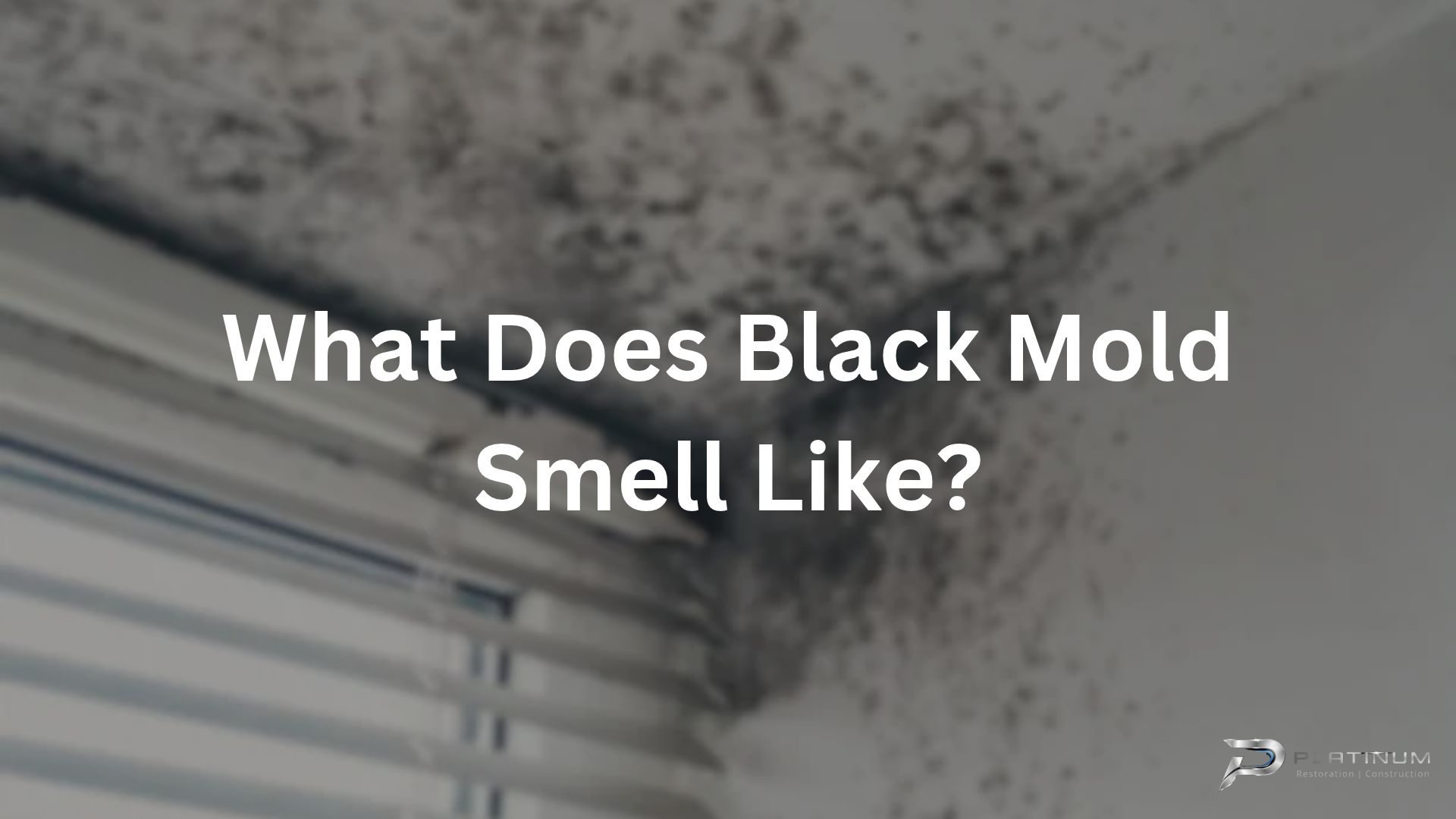
Smell is often the first clue that mold is present, sometimes showing up well before any visible growth appears. Understanding what black mold typically smells like, and why that smell develops in the first place, helps you recognize the signal and respond appropriately rather than dismissing it as a generic household odor.
What Black Mold Typically Smells Like
Black mold, commonly referring to Stachybotrys chartarum, produces a smell most people describe as musty, earthy, and distinctly stale, similar to wet soil, damp cardboard, or an old, unaired basement. This odor comes from microbial volatile organic compounds, byproducts released as mold actively grows and metabolizes the material it’s feeding on. The smell tends to be persistent rather than fleeting, and it doesn’t resolve with standard cleaning or simply airing out a room the way a more temporary odor would.
- Often described as musty, earthy, or similar to wet soil or damp cardboard
- Tends to be persistent and doesn’t dissipate with normal cleaning or ventilation
- Can range from faint to strong depending on the extent and location of the growth
- Sometimes described as having a slightly sour or stale quality layered on top of the general mustiness
Why Mold Produces This Particular Smell
The smell associated with mold comes from compounds released as the organism grows and breaks down organic material, whether that’s drywall paper, wood, or other cellulose-based substances. This is an active biological process, which is part of why the smell tends to persist as long as the mold continues growing, rather than being a smell that simply lingers from something that happened once and stopped.
Why Smell Often Comes Before Visible Signs
Mold frequently develops in spaces that aren’t immediately visible, inside wall cavities, under flooring, in HVAC ductwork, which means the smell it produces can reach a room well before any visible growth does, if visible growth ever becomes apparent in that particular room at all. This is exactly why a persistent musty smell with no obvious visible source is worth taking seriously rather than assuming it will resolve on its own, since it may be the clearest early indicator available for mold that’s otherwise completely hidden from view.
Where the Smell Tends to Be Strongest
Certain areas of a home are more likely to produce a noticeable mold smell given their typical moisture exposure.
- Bathrooms, particularly around tubs, showers, and any area with inadequate ventilation
- Basements and crawl spaces, given their naturally higher humidity and limited airflow
- Areas near a known or suspected past water event, including behind walls or under flooring that experienced a leak
- Closets and storage areas on exterior walls, especially those with limited air circulation
- Near HVAC vents, if mold has developed within ductwork and is circulating the smell throughout the home when the system runs
| Location | Why Smell Tends to Concentrate There |
|---|---|
| Bathrooms | Consistent moisture exposure, often limited ventilation |
| Basements/crawl spaces | Naturally higher humidity, limited airflow |
| Areas near past leaks | Residual moisture may remain even after visible repair |
| Exterior-wall closets | Limited air circulation, cooler surface temperatures |
| Near HVAC vents | Mold within ductwork circulates smell when system runs |
How Smell Intensity Can Indicate Severity
Generally speaking, a stronger, more pervasive smell tends to correlate with more extensive mold growth, while a faint, barely noticeable smell may indicate an earlier-stage or smaller affected area. This isn’t an exact science, since factors like ventilation and the specific location of growth also affect how strongly a smell presents itself, but it’s a reasonable general pattern worth paying attention to when assessing how seriously to treat what you’re noticing.
What to Do When You Notice This Smell
If you’re noticing a persistent musty odor consistent with what’s described here, the appropriate response depends on whether you can locate a visible source. If the smell is tied to visible mold on an easily accessible, non-porous surface, standard cleaning paired with addressing the underlying moisture source is often sufficient. If the smell persists without any visible source, or if it’s strong and pervasive throughout a room or area, professional investigation using moisture mapping and, where needed, air sampling is the more reliable way to locate what’s producing it. Our guide on how mold is detected covers the tools used to find mold that isn’t visible, and our signs you need mold remediation guide can help you decide on next steps.
A Real Example of Smell Revealing a Hidden Problem
A homeowner in Mesquite noticed a persistent musty smell in their home office that seemed to intensify slightly whenever the HVAC system ran, though there was no visible mold anywhere in the room. Assuming it might be related to the carpet, they had it professionally cleaned, which had no effect on the smell at all.
When our team investigated, moisture mapping and an inspection of the nearby ductwork revealed mold growth had developed inside a section of ducting that ran close to an area affected by a previous, minor roof leak the homeowner hadn’t connected to the current smell. Every time the HVAC system activated, it was circulating that smell, and the mold spores along with it, throughout the room. Addressing the ductwork and the underlying moisture source resolved the smell completely, something the carpet cleaning was never going to accomplish since the carpet was never the actual source.
This case illustrates why a smell that doesn’t trace to an obvious visible cause is worth investigating properly rather than guessing at likely sources based on what’s easiest to check first.
Why Taking This Smell Seriously Matters
A persistent musty smell is one of the more reliable signals available for mold that hasn’t yet become visible, or that’s developing somewhere you wouldn’t think to look without a specific reason. Dismissing it as a generic old-house smell or assuming it will resolve on its own risks allowing a developing problem to continue undetected and spread further before it’s finally addressed.
Platinum Service Group is a family-owned business with more than 20 years of experience serving Dallas-Fort Worth and the surrounding North Texas area. Our team holds IICRC, ACAC, and NADCA certifications, including mold remediation credentials, and is available 24/7 to investigate a persistent mold-like smell using professional moisture mapping and testing, locating the source even when it isn’t visible. Our guide to common mold locations throughout the home pairs well with this guide for knowing where to check first, and you can contact us to schedule an assessment whenever this smell warrants a closer look.
Frequently Asked Questions
How is black mold’s smell different from regular mustiness or a stuffy room?
A general stuffy smell typically resolves with ventilation or cleaning, while a mold-related smell tends to persist consistently despite these efforts, since it’s actively being produced by ongoing biological growth rather than simply lingering air.
Can the smell be strong even if the visible mold is small?
It can vary. Smell intensity is influenced by ventilation and the specific location of growth, so a small area in a poorly ventilated space can sometimes produce a more noticeable smell than a similar-sized patch elsewhere.
Is it possible to have mold without any smell at all?
It’s less common but possible, particularly for very early-stage or extremely limited growth. Smell is one of several indicators worth monitoring alongside visible signs and any moisture history in the home.
Why did carpet cleaning not resolve the musty smell in the Mesquite example?
Because the carpet was never the actual source. The smell was coming from mold within the HVAC ductwork, which is why addressing symptoms without investigating the true source often fails to resolve the underlying issue.
Should I try to locate the smell’s source myself before calling a professional?
A basic check of visible areas, under sinks, in closets, around windows, is reasonable, but if the smell persists without an obvious source, professional detection tools are considerably more reliable than continued guessing.
A persistent musty, earthy smell is one of mold’s clearest calling cards, often present before any visible sign develops. Taking that smell seriously, rather than dismissing it as a generic odor, gives you the best chance of catching and addressing a mold issue while it’s still at its most manageable stage.