
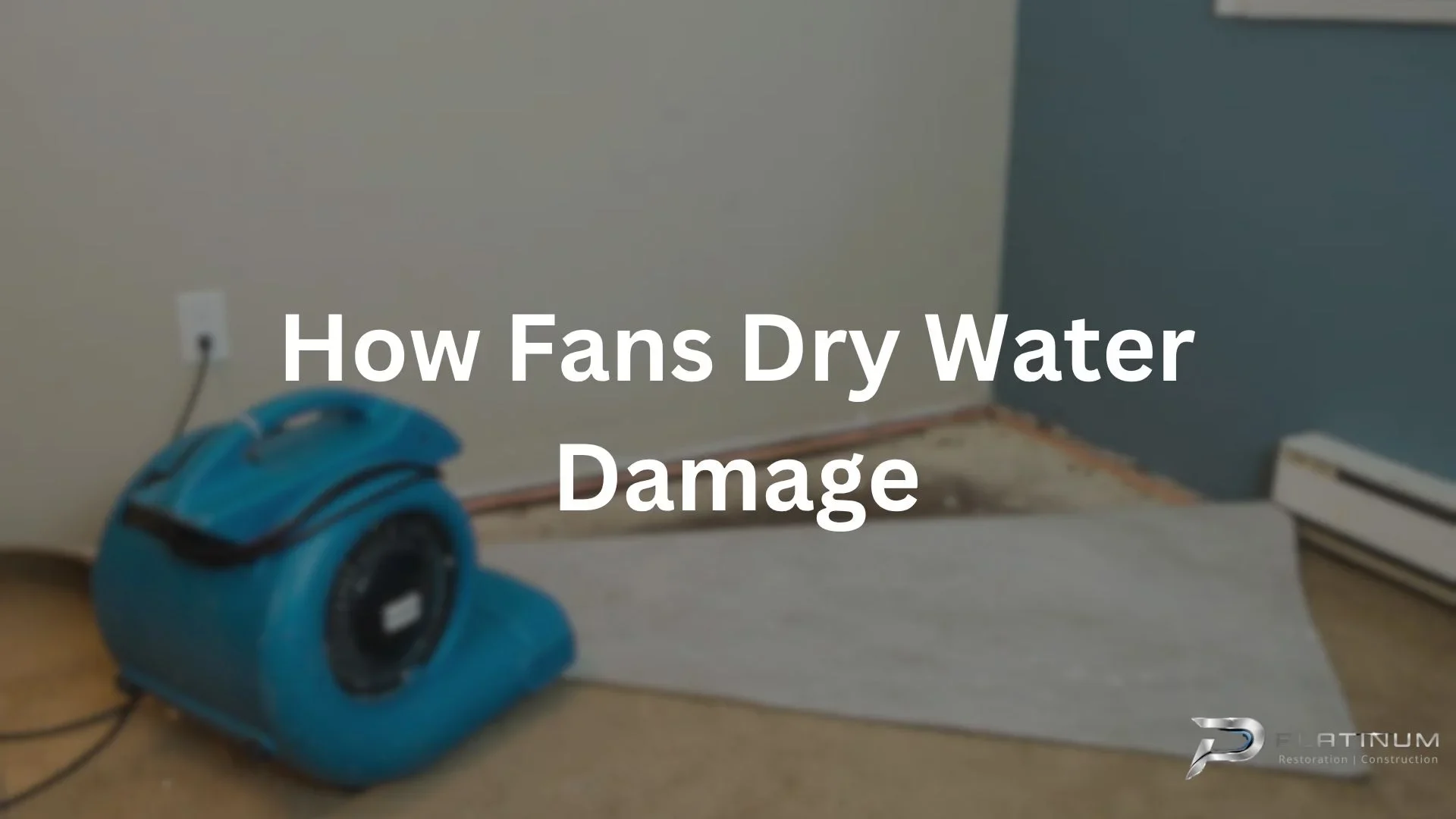
After water damage, the first instinct is often to grab a few fans and a dehumidifier and let them run. It’s a sensible move, and it does help. But whether it’s enough depends on how the equipment works, what it’s drying, and how much water got in.
At Platinum Service Group, drying equipment is a daily part of our restoration work across Decatur, Bridgeport, Alvord, Boyd, and the rest of Wise County. Here’s how fans and dehumidifiers actually dry a home, what each one does, and where their limits are.
The Short Answer
Yes, fans and dehumidifiers can dry a water-damaged home, and they are the core of professional drying too. The difference is scale and control. Small, fresh, surface-level moisture can sometimes be handled with household equipment. Larger or deeper water damage needs more powerful equipment and monitoring to be dried completely.
How Drying Actually Works
Drying is a two-part process. Water has to leave the materials, and then it has to leave the air. If either step stalls, drying stalls.
- Evaporation: moisture moves from wet materials into the surrounding air
- Removal: that moisture-filled air needs to be pulled out of the space
Fans handle the first part. Dehumidifiers handle the second. Neither works well without the other.
What Fans Do
Fans move air across wet surfaces, which speeds up evaporation. Without airflow, a thin layer of humid air forms right over a wet surface and slows drying. Moving air breaks that layer up and carries moisture away.
Fans are useful for:
- Drying carpets and floors
- Speeding up evaporation on walls
- Circulating air through enclosed areas
- Preventing stagnant, humid pockets
What fans can’t do is remove moisture from the home. They only move it. If the air in the room is already humid, fans just spread that moisture around, and it can settle on other surfaces.
What Dehumidifiers Do
Dehumidifiers pull moisture out of the air and collect it as water. Once the air is drier, it can absorb more moisture from wet materials, which keeps the drying process moving.
Dehumidifiers are useful for:
- Lowering humidity so materials keep releasing moisture
- Protecting unaffected areas from absorbing moisture
- Reducing the conditions mold needs to grow
- Finishing the drying of materials that fans alone leave damp
A dehumidifier works best in a closed space. Running one with open windows lets humid outdoor air in and undoes the work.
Why Fans And Dehumidifiers Work Best Together
| Equipment | Main Job | What It Can’t Do Alone |
| Fans | Move air and speed evaporation | Remove moisture from the home |
| Dehumidifiers | Remove moisture from the air | Move air across wet materials |
| Both together | Evaporate and remove moisture | Reach deep or hidden moisture without added tools |
Used together, fans pull moisture out of materials and the dehumidifier captures it. This cycle is the foundation of structural drying.
Household Equipment Vs Professional Equipment
The basic principles are the same, but the capacity is very different.
| Feature | Household Equipment | Professional Equipment |
| Air movement | Moderate | Powerful, directed airflow |
| Moisture removal | Limited per day | High capacity, built for flooding |
| Placement | Often guesswork | Calculated for the space |
| Monitoring | Rarely measured | Moisture readings tracked daily |
| Typical use | Small, fresh spills | Larger or deeper water damage |
Professional air movers push air at wet surfaces, including along walls and under floors, and commercial dehumidifiers remove far more moisture per day than a household unit. Just as important, technicians adjust the setup as drying progresses. This is one of the reasons DIY water damage cleanup carries real risks when the damage goes beyond a small spill.
What Fans And Dehumidifiers Struggle To Reach
Even good equipment has limits when moisture sits where air can’t easily reach:
- Inside wall cavities behind intact drywall
- Under flooring and in subfloors
- Within insulation
- Beneath cabinets and built-ins
- Inside framing and other dense wood
In these spots, moisture can stay trapped long after the surface feels dry. Reaching it often means opening small access points, using specialized drying equipment, or removing materials that can’t be dried in place. Knowing the signs of wall water damage helps you spot trouble that equipment alone may have missed.
How To Tell If Drying Is Actually Working
Drying shouldn’t be judged by touch alone. Better signs include:
- Moisture readings that steadily drop toward normal levels
- Humidity in the room falling instead of staying high
- The musty smell fading rather than lingering
- No new staining, warping, or peeling appearing days later
Without measurements, it’s easy to stop drying too soon. Materials that feel dry can still hold enough moisture to support mold.
How Long Does Drying Take?
Drying time depends on the amount of water, the materials involved, and the conditions in the home.
| Situation | Typical Drying Time |
| Small, surface-level spill | 1 to 2 days |
| Wet carpet and padding, removed promptly | 2 to 4 days |
| Water in walls and subfloors | 3 to 5 days or more |
| Larger flooding with saturated materials | 5 days or more |
These are general ranges. The only reliable way to know drying is complete is to measure moisture in the materials, not just the air. For the bigger picture, see our guide on how long water damage restoration takes.
Drying In North Texas Conditions
Wise County’s humidity is a real factor in how well fans and dehumidifiers perform. When the air outside is already damp, as it often is after a storm in Decatur, Bridgeport, Alvord, or Boyd, opening windows to help drying can backfire by bringing in more moisture. Homes here also tend to hold humidity longer after heavy rain, which slows evaporation and makes dehumidification more important than airflow alone. Running equipment in a closed, controlled space gives it the best chance of working.
A Case Study: Fans Alone Weren’t Enough
A homeowner in the area had a water heater leak overnight that soaked a hallway and part of a bedroom. They did what many people do: removed the standing water and ran several box fans for four days with the windows open. The carpet felt dry and the room looked fine.
Two weeks later, a musty smell developed and the baseboards began to bubble. When we measured moisture, the lower section of drywall and the carpet padding were still wet, and the humidity in the room was high. Open windows during a humid stretch had let outside moisture in, and the fans had only moved damp air around.
We removed the saturated padding, set up commercial dehumidifiers and air movers in a closed space, and monitored readings until the drywall and subfloor returned to normal. The area dried completely in about four days, and the home was rebuilt without mold.
The takeaway: the fans were doing something useful, but without dehumidification and measurement, moisture stayed hidden.
Tips For Using Fans And Dehumidifiers Correctly
- Keep windows and doors closed while dehumidifying
- Aim fans across wet surfaces rather than at the ceiling
- Empty or drain the dehumidifier regularly so it keeps running
- Remove soaked padding and insulation that can’t dry in place
- Keep equipment running continuously, not on and off
- Check moisture levels instead of relying on touch
Our list of essential steps after water damage covers what to do alongside drying, and our guide on how to choose a water damage restoration company can help if you decide the job needs professional equipment.
Frequently Asked Questions
Can I dry my house with just fans?
Fans speed up evaporation but don’t remove moisture from the home. Without a dehumidifier, humidity can stay high and drying can stall.
Is one dehumidifier enough for a flooded room?
For a small, fresh spill, possibly. For larger water damage, a household unit usually can’t remove moisture fast enough to prevent mold.
Should I open windows while drying?
Only if outdoor air is drier than indoor air. In humid weather, open windows can bring in more moisture than the equipment can remove.
How long should I run the equipment?
Until moisture readings in the materials return to normal, not just until the surface feels dry. This often takes several days.
Can fans and dehumidifiers prevent mold?
They lower the risk by removing moisture quickly, but only if materials are dried completely and fast. Mold can begin within 24 to 48 hours.
What if the smell stays after drying?
A lingering musty smell often means moisture or mold is still present somewhere, such as in a wall cavity or under flooring. It’s worth having it checked.
Final Thoughts
Fans and dehumidifiers are the backbone of drying a water-damaged home. Fans move moisture out of materials, and dehumidifiers remove it from the air. The challenge is hidden moisture, scale, and knowing when drying is truly finished. Measuring, not guessing, is what separates a dry home from one that only feels dry.