
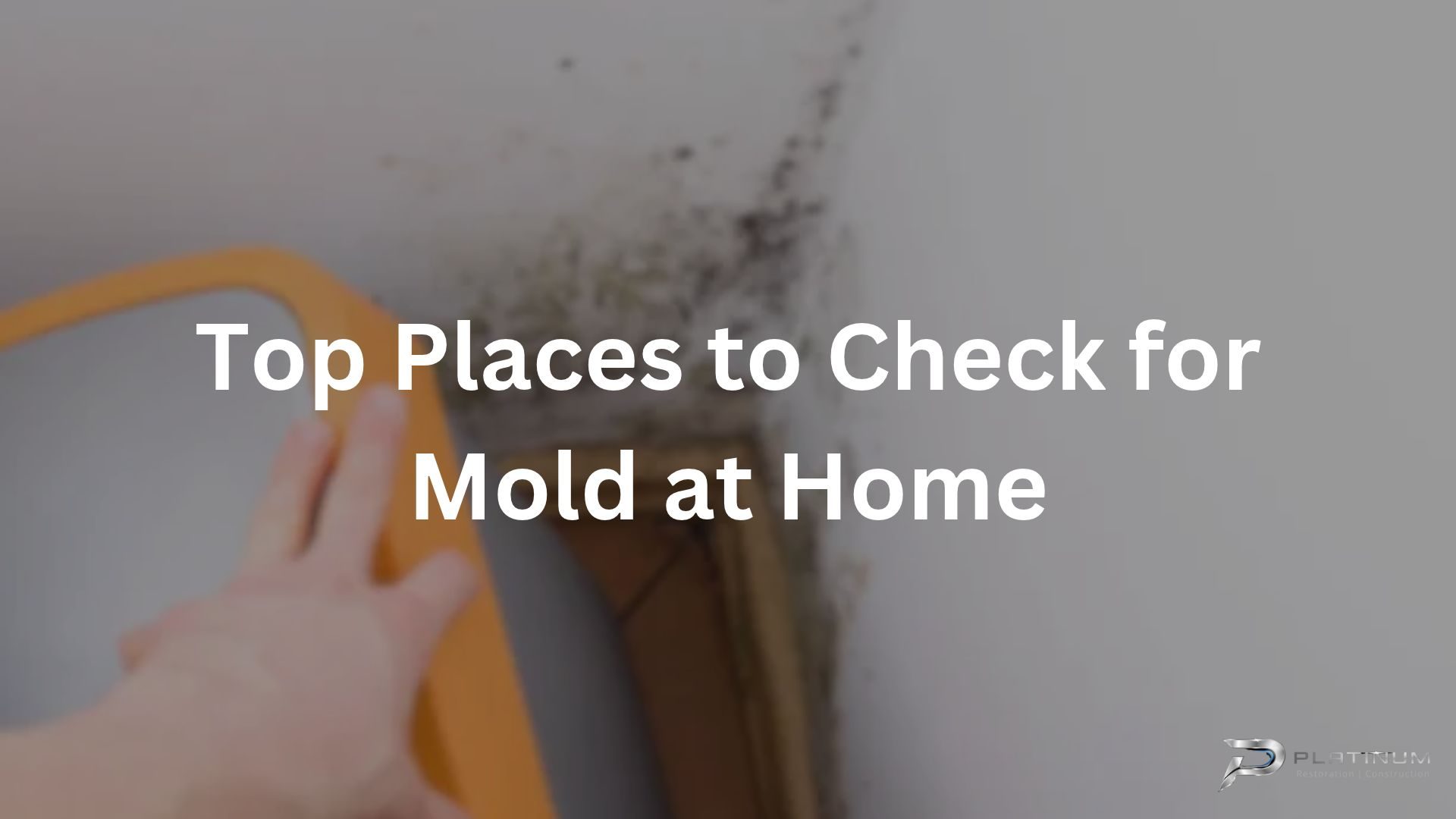
Mold doesn’t appear evenly throughout a home, it develops in specific, predictable spots where moisture and limited airflow combine. Building a periodic check of these locations into your home maintenance routine, rather than only reacting once you notice a smell or discoloration, catches problems while they’re still small and manageable. Here’s where to look, room by room.
Bathrooms
Given their constant moisture exposure, bathrooms are the single most common spot for mold to develop, often in areas that don’t get thoroughly addressed during regular cleaning.
- Check grout and caulking around tubs and showers for discoloration or gaps that suggest water is getting behind the surface
- Look behind and around toilets for staining at the base, which can indicate a wax ring failure leaking into the subfloor
- Inspect under sinks for cabinet staining or a musty smell
- Confirm your exhaust fan is running effectively and actually venting to the exterior rather than into the attic
Kitchen
Kitchens combine plumbing, appliances, and moisture in ways that create several spots worth checking regularly.
- Check under the sink for staining, soft cabinet material, or dampness
- Look behind and underneath the refrigerator if accessible, since ice maker supply lines are a common slow-leak source
- Inspect around the dishwasher connection for signs of past or active water intrusion
- Check ceiling areas below any second-floor bathroom, since kitchen ceiling staining often traces back to a leak above
Basement or Crawl Space
These below-grade areas naturally run higher humidity and lower airflow, making them a priority for routine checks.
- Look along foundation walls for discoloration, staining, or a visible fuzzy texture
- Check near the sump pump, water heater, or any plumbing fixtures located in this space
- Pay attention to items stored directly on the floor, since boxes or furniture can both hide mold and contribute to the moisture conditions that cause it
- Note any musty smell, even without visible growth
Attic
Limited foot traffic means attic issues can go unnoticed for extended periods, which makes a periodic check especially valuable here.
- Inspect the underside of roof decking for dark staining, indicating past or current moisture intrusion
- Check insulation for compression, discoloration, or dampness
- Look around roof penetrations, such as vents or chimneys, where flashing failures commonly allow water entry
- Confirm bathroom exhaust fans vent properly to the exterior rather than discharging into the attic space
Windows and Exterior Walls
Condensation and water intrusion both make window areas and exterior-facing walls worth checking throughout the home.
- Look at window frames and sills for discoloration, particularly on north-facing windows that dry out more slowly
- Check drywall near exterior walls for soft spots or subtle discoloration
- Note any room that feels noticeably more humid or carries a musty quality compared to the rest of the home
Laundry Area
Washing machines and damp laundry create favorable mold conditions that are easy to overlook since the smell often seems to come from clothes rather than the equipment itself.
- Check the washing machine door gasket, especially on front-loading machines, for visible mold buildup
- Confirm wet laundry isn’t sitting in the washer for extended periods before being transferred to the dryer
- Note any musty smell on freshly washed clothes, which can indicate the machine itself is the source
Closets and Storage Areas
Closets on exterior walls or in basements often have limited airflow, especially when packed tightly with stored items.
- Check items stored against exterior walls for dampness or musty smell
- Confirm closets aren’t packed so tightly that air can’t circulate at all
- Periodically open doors to rarely used storage areas to allow some air exchange
| Area | Check Frequency | Key Signs to Watch For |
|---|---|---|
| Bathrooms | Monthly | Grout discoloration, cabinet staining |
| Kitchen | Monthly | Under-sink staining, ceiling stains below bathrooms |
| Basement/crawl space | Monthly to quarterly | Wall staining, musty smell |
| Attic | Twice yearly, plus after storms | Roof decking staining, wet insulation |
| Windows/exterior walls | Quarterly | Frame discoloration, condensation patterns |
| Laundry area | Monthly | Gasket mold, musty-smelling laundry |
| Closets/storage | Quarterly | Dampness on stored items, stale smell |
Building This Into a Routine
A full walkthrough of these areas doesn’t need to happen all at once. Pairing bathroom, kitchen, and laundry checks with your regular cleaning routine keeps those high-frequency spots covered monthly, while basement, attic, and closet checks work well on a quarterly schedule, with an additional attic check after any significant storm. Keeping a simple mental or written note of what’s normal for each area helps you notice when something’s genuinely changed rather than relying on memory alone.
What to Do When You Notice Something
If a routine check turns up a small, visible patch on a non-porous surface, standard cleaning paired with addressing the underlying moisture source is often sufficient. A persistent musty smell without a visible source, mold that keeps returning, or any signs of soft or compromised material are signals that professional assessment is the more reliable path. Our signs you need mold remediation guide can help you decide, and our guide on how mold is detected covers what professional tools add once a routine check flags a concern.
Platinum Service Group is a family-owned business with more than 20 years of experience serving Dallas-Fort Worth and the surrounding North Texas area. Our team holds IICRC, ACAC, and NADCA certifications, including mold remediation credentials, and is available 24/7 to investigate anything a routine check turns up, using professional moisture mapping to confirm what’s actually happening. Our mold detection tips every homeowner should know pairs well with this checklist for building sensory awareness into your routine. You can contact us to schedule an assessment whenever something warrants a closer look.
Frequently Asked Questions
How often should I do a full mold check of my entire home?
A quarterly full walkthrough, with monthly attention to high-moisture areas like bathrooms and kitchens, is a reasonable baseline for most homes.
Which area is most commonly overlooked during routine checks?
Attics and the washing machine gasket tend to be the most frequently skipped, mainly because they require more deliberate effort to check compared to more visible areas.
Should I check these areas more often after a storm?
Yes, particularly the attic and any below-grade spaces, since storm-related moisture intrusion often shows up first in these less-visible locations.
Is it normal to find a small amount of mold during a routine check?
A small, isolated patch on a non-porous surface with an identifiable, addressable cause is manageable with standard cleaning. Anything larger, recurring, or without an obvious cause is worth a closer look.
Do I need special tools for this kind of routine check?
No, a flashlight and your own senses, sight, smell, and touch, are sufficient for this kind of routine inspection. Professional tools come into play once something warrants further investigation.
Building a routine around these common mold locations turns detection from a reactive scramble into a manageable habit. A few minutes spent checking the right spots on a consistent schedule catches problems while they’re still small, long before they become the kind of issue that requires extensive remediation.