
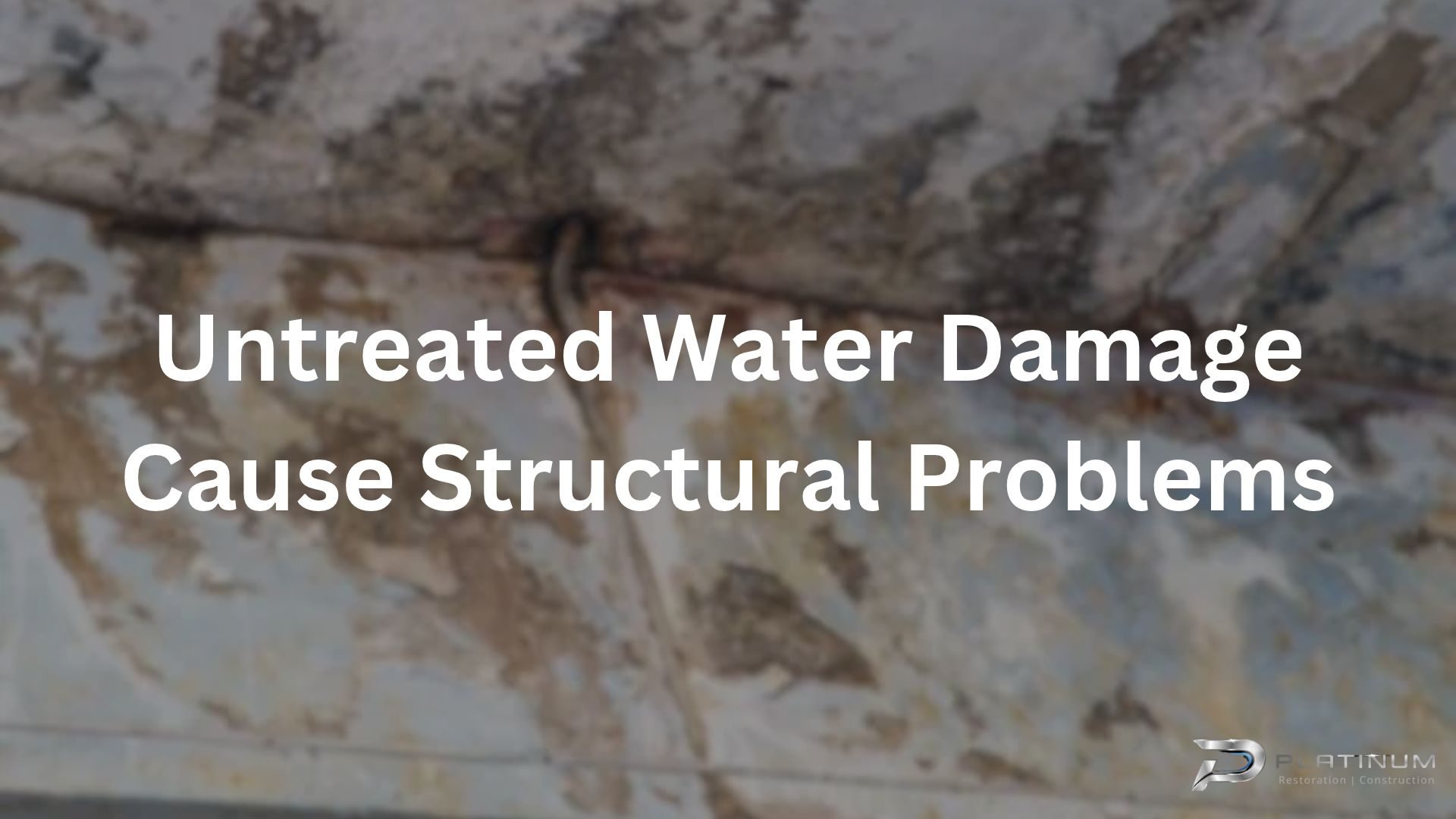
A damp spot on the ceiling or a patch of soft flooring can seem like a small problem. It’s easy to tell yourself you’ll deal with it later, or that it will dry out on its own. But water doesn’t stay small when it’s left alone. Given enough time, it can quietly weaken the very parts of your home that hold it up.
So can water damage cause structural issues if it’s left untreated? Yes, and the longer it sits, the more likely and more serious those issues become. At Platinum Service Group, we see the difference between damage caught early and damage that has been ignored for months, and the gap in repair cost and scope is often large. Here’s how untreated water damage affects a home’s structure, how fast it happens, and what to watch for.
The Short Answer
Untreated water damage can absolutely lead to structural problems. Moisture trapped in wood, drywall, and subfloors causes rot, weakens materials, and invites mold and pests. Small, quickly dried leaks rarely cause lasting structural harm, but repeated or long term moisture exposure can compromise framing, floors, ceilings, and even foundations.
Why Water Is So Hard On A Home
Most homes are built from materials that don’t mix well with prolonged moisture. Wood framing, subflooring, drywall, and insulation are all absorbent to some degree. When they stay wet, a chain of problems begins.
Water also moves. It travels along beams, wicks up through drywall, seeps under flooring, and settles in places you can’t see. By the time a stain appears, the moisture behind it has often spread much further than the visible mark. Our guide on common causes of water damage shows how many different sources can start this process.
How Untreated Water Damage Affects Structure Over Time
The damage builds in stages. The timeline varies with the amount of water and the materials involved, but the general pattern looks like this.
| Time Left Untreated | What Typically Happens |
|---|---|
| First 24 to 48 hours | Materials absorb water, mold can begin to form |
| 3 to 7 days | Drywall softens, wood begins to swell and warp, odors develop |
| 1 to 4 weeks | Mold spreads, finishes fail, early wood decay can begin |
| 1 to 3 months | Wood weakens, subfloors soften, metal fasteners begin to corrode |
| Several months or longer | Rot, structural sagging, and significant material failure become likely |
These are general patterns, not guarantees. Continuous leaks speed things up, while a one time wetting that dries partially may progress more slowly.
The Structural Components At Risk
Wood Framing
Studs, joists, and beams hold up walls, floors, and roofs. When wood stays wet, it becomes a target for fungal decay, commonly called rot. Rotted wood loses strength, and in serious cases it can no longer carry its intended load. Repairs may involve reinforcing or replacing structural members.
Subfloors
Subflooring sits beneath your finished floors and is often made from plywood or oriented strand board, both of which swell and delaminate when soaked repeatedly. Signs include soft spots, sagging, squeaks, and floors that feel bouncy underfoot. Our guides on fixing water damaged hardwood floors and swollen wood floors cover what repair involves.
Drywall And Ceilings
Soaked drywall softens and crumbles, and wet ceilings can sag and, in the worst cases, collapse, especially when insulation above is saturated and heavy. See how to fix a water damaged ceiling for what that repair looks like.
Insulation, Fasteners, And Connectors
Wet insulation becomes heavy, loses its ability to insulate, and holds moisture against framing, which keeps wood damp longer. Nails, screws, and metal connectors can also corrode over time, weakening the connections between structural pieces even when the wood itself looks intact.
Foundations And Roof Structure
Water around or under a foundation can cause soil movement, cracking, and settling, and these problems tend to develop gradually, which is why they’re often noticed late. Our article on when water damage affects your foundation explains the timeline. Persistent roof leaks can also rot decking, rafters, and trusses, and because attics are rarely checked, this damage can go unnoticed for a long time.
Secondary Problems That Make It Worse
Structural weakening rarely happens in isolation. Untreated moisture usually brings other issues along with it:
- Mold growth: mold feeds on damp organic materials and signals ongoing moisture. Our guide on whether mold from water damage is dangerous explains the risks.
- Wood rot: fungal decay breaks down wood fibers and reduces strength
- Pests: damp, softened wood is more attractive to termites and wood boring insects
- Electrical hazards: moisture near wiring and outlets can cause shorts, corrosion, and fire risk
- Persistent odors: trapped moisture and mold often cause musty smells that last until the source is fixed
Warning Signs Of Structural Damage From Water
Structural issues often announce themselves quietly before they become obvious. Signs worth taking seriously include:
- Floors that sag, bounce, or feel soft underfoot
- Ceilings that bow, sag, or show spreading stains
- Walls that bulge or feel soft when pressed
- Doors and windows that suddenly stick or no longer close properly
- New cracks in walls or ceilings, especially near corners
- Warped, cupped, or buckled flooring
- A persistent musty smell
- Visible rot, dark staining, or crumbling wood
If you notice several of these together, particularly after a known leak or flooding event, have the area professionally assessed. Our guide on the structural warning signs of wall water damage goes into more detail.
Why Small Leaks Can Do Big Damage
It’s tempting to think only dramatic flooding causes structural harm. In reality, slow, hidden leaks can be some of the most destructive. A pinhole leak in a pipe inside a wall, a failing seal around a tub, or a worn roof flashing can drip for weeks or months without being noticed. The slow, steady moisture keeps wood damp the whole time, which is exactly the condition rot needs.
Because the leak is small, there’s no obvious emergency. By the time a stain or smell shows up, the damage behind the surface may already be significant. See our pages on plumbing leaks and appliance leaks for common hidden sources.
What Determines How Serious The Damage Becomes
Not every water event leads to structural problems. Several factors decide the outcome:
- Duration: the longer materials stay wet, the greater the risk
- Volume: larger amounts of water soak deeper and spread farther
- Water type: contaminated water creates additional hazards and speeds material breakdown
- Materials involved: solid wood tolerates moisture better than pressed wood or drywall
- Drying speed: materials that dry quickly are far less likely to rot
- Repeat exposure: repeated wetting and drying cycles can be as damaging as one long soak
Can Structural Damage Be Reversed?
It depends on how far it has progressed. If wood is only damp, thorough drying can prevent damage. If rot has begun, the affected wood generally can’t be restored to its original strength and usually needs to be repaired or replaced. Early action is what separates a drying job from a rebuilding job.
How Professionals Assess Structural Water Damage
A proper assessment goes beyond a visual check. A thorough evaluation typically includes moisture meter readings in framing, subfloors, and drywall, thermal imaging to spot hidden damp areas, inspection of attics and crawl spaces, probing suspect wood for softness or decay, and confirming the source of the water. Our guide on how professionals detect hidden moisture explains the tools involved. When structural integrity is in question, a licensed structural engineer may be recommended, which is a sign of careful work, not an overreaction.
What To Do If You Suspect Structural Damage
- Stop the source of the water if it’s still active
- Keep people away from sagging ceilings or soft floors
- Avoid putting heavy loads on suspect areas
- Take photos and notes of everything you see
- Call a professional for an inspection and moisture assessment
- Notify your insurance company promptly
- Avoid cosmetic repairs until the cause is found and the area is dry
Painting over stains or replacing flooring without checking what’s underneath is one of the most common ways small problems turn into big ones. Our list of water damage mistakes to avoid covers more.
Insurance And Untreated Damage
Insurance coverage often depends on how the damage happened and how quickly it was addressed. Sudden events like a burst pipe are commonly treated differently from long term leaks or neglect, and many policies expect homeowners to take reasonable steps to prevent further damage. Coverage varies widely, so review your policy and speak with your insurer. Our overview of homeowners insurance and property damage explains typical patterns.
A Case Study: The Floor That Started To Sag
A homeowner called us about a bathroom floor that had started to feel soft near the tub. They’d noticed a faint musty smell for several months and a small stain on the ceiling of the room below, but nothing seemed urgent. They assumed it was humidity and kept putting it off.
When we inspected, moisture readings showed elevated dampness across a large section of the subfloor and the nearby joists. A slow leak at a tub drain connection had been dripping into the floor cavity for a long time. The subfloor had softened and begun to delaminate, and part of one joist had developed early rot. The ceiling below was saturated, and wet insulation was holding water against the framing.
Because the damage was caught before the floor failed, the repair was manageable. We repaired the drain leak, removed the damaged subfloor and wet insulation, dried and treated the surrounding framing, reinforced the affected joist, and rebuilt the floor and ceiling. The homeowner told us they wished they had called when they first noticed the smell. A friend with a similar leak who waited another year ended up with a section of floor that gave way underfoot.
The takeaway: a small, ignored leak can quietly turn into a structural repair, and the smell and soft spots were the early warning signs.
How To Prevent Structural Water Damage
- Fix leaks as soon as you find them
- Dry any water intrusion within 24 to 48 hours
- Check under sinks, around toilets, and near appliances regularly
- Inspect your roof and attic periodically
- Keep gutters and downspouts clear and directed away from the foundation
- Make sure bathrooms and kitchens have working ventilation
- Schedule an inspection after any significant water event
If you’re unsure who to call, our guide on how to choose a water damage restoration company covers what to look for, and our water damage repair process guide shows what a full repair involves.
Frequently Asked Questions
How long does it take for water damage to become structural?
It varies, but noticeable weakening can begin within weeks of continuous moisture, and serious rot can develop within months. A single event dried within a day or two rarely causes structural problems.
Can a small leak cause structural damage?
Yes. Slow, hidden leaks are especially risky because they keep wood damp for long periods without being noticed.
Is mold a structural problem?
Mold mainly affects air quality and surface materials, but it signals ongoing moisture. The same moisture that supports mold can also cause wood rot, which is structural.
Can rotted wood be repaired instead of replaced?
Sometimes small areas can be treated and reinforced, but significantly rotted structural wood is usually replaced or reinforced with new material.
How do I know if my home is structurally unsafe after water damage?
Sagging floors or ceilings, bulging walls, and sticking doors are warning signs. A professional inspection, and an engineer if needed, can confirm safety.
Will insurance cover structural damage from untreated water?
It depends on the cause and your policy. Our guide on how water damage claims work explains the process, and your insurer can confirm your coverage.
Should I wait to see if the damage gets worse?
Waiting is risky. Water damage tends to progress, and acting early almost always costs less than repairing advanced damage. Our article on why homeowners must act fast after water damage explains why.
Final Thoughts
Water damage that goes untreated doesn’t stay cosmetic. It can rot wood, soften subfloors, corrode fasteners, and compromise the structure that keeps your home safe. The earlier it’s caught and dried, the smaller the repair. If you’ve noticed a stain, a soft spot, a musty smell, or any sign of past water damage, don’t wait for it to get worse. Contact Platinum Service Group today for your free inspection and quote.