
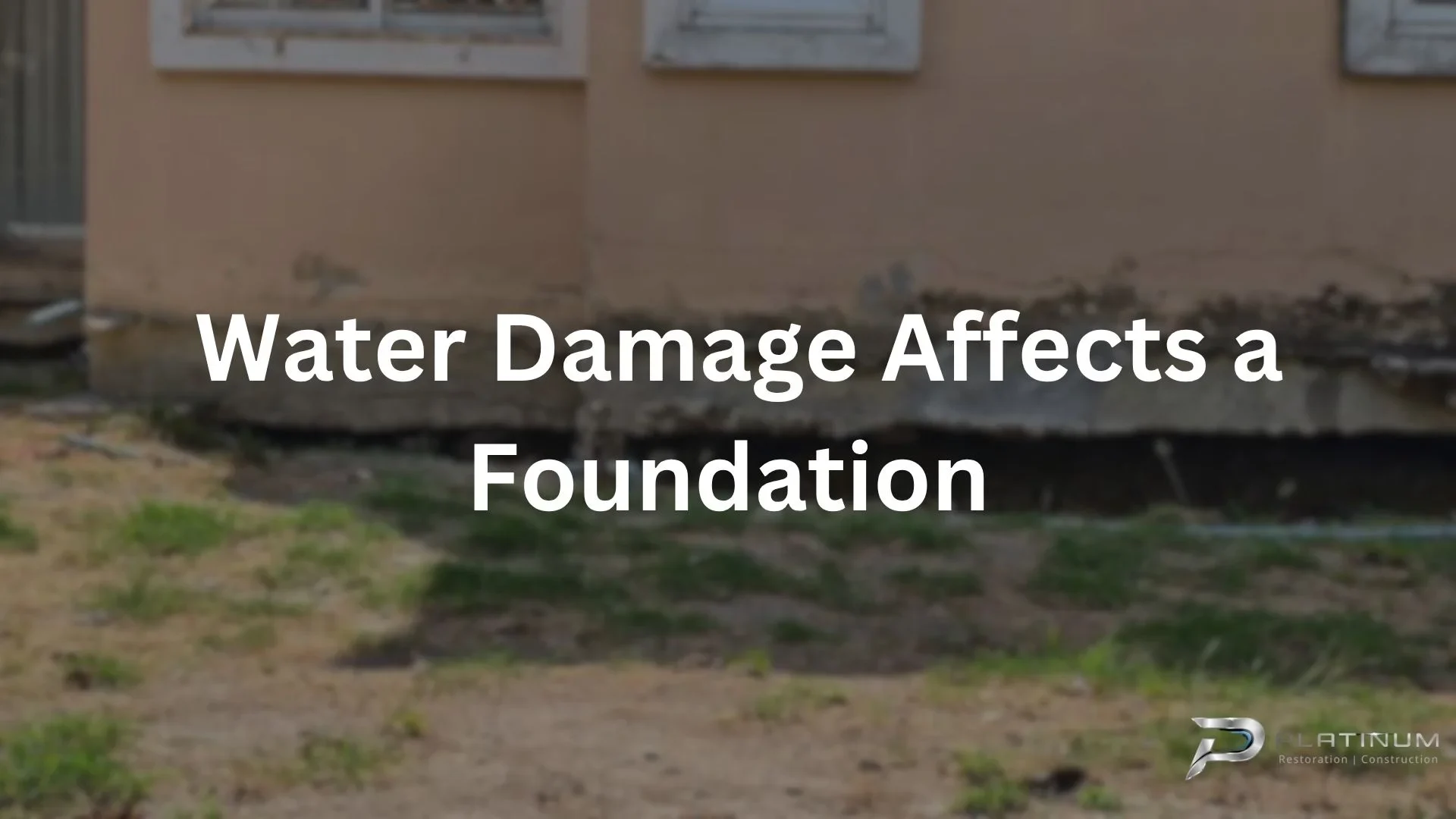
Water damage inside a home gets attention fast, a stained ceiling or a flooded floor is hard to ignore. But water around or under your foundation is a quieter, slower-moving concern, and one that’s easy to underestimate because the damage isn’t always immediately visible. So how long does it actually take before water starts affecting your foundation, and what determines that timeline?
At Platinum Service Group, our technicians hold IICRC certification in Water Damage Remediation and Applied Structural Drying, training that includes understanding how moisture moves through and around a structure, including foundation-level concerns. Here’s a realistic look at the timeline and the factors that speed it up or slow it down.
Why There’s No One-Size-Fits-All Timeline
Several variables significantly affect how quickly water impacts a foundation:
- Soil type: Expansive clay soils absorb and release water dramatically, swelling when wet and shrinking when dry, which puts more stress on a foundation than more stable soil types
- Foundation type: Slab foundations, pier and beam, and basement foundations each respond differently to moisture exposure
- Drainage conditions: Poor grading or clogged gutters that direct water toward the foundation accelerate problems compared to a home with good drainage
- Water volume and duration: A one-time heavy rain is very different from chronic, repeated moisture exposure over months or years
- Existing foundation condition: A foundation with pre-existing cracks or weaknesses is affected faster than one in excellent condition
A General Timeline Of Water’s Effect On A Foundation
Within Hours To Days
Standing water against a foundation begins saturating the surrounding soil almost immediately. For slab foundations, this can mean moisture starting to work its way through hairline cracks or porous areas of concrete within a day or two of sustained exposure, though visible interior signs usually take longer to appear.
Within One To Two Weeks
If water exposure continues, consistent flooding, a persistent drainage issue, or an ongoing plumbing leak near the foundation, soil saturation levels can start causing measurable shifts, particularly in expansive clay soils. This is also around when early signs like small new cracks in interior walls or doors that start sticking may begin to show up, especially if the exposure is significant.
Within One To Three Months
Sustained or repeated water exposure over this timeframe can lead to noticeable foundation movement in vulnerable soil conditions. This is often when homeowners start to notice more obvious signs: visible cracks in the foundation itself, gaps forming around windows or doors, or uneven flooring in certain rooms.
Six Months And Beyond
Chronic, unaddressed water exposure, like an ongoing drainage problem or a slow plumbing leak near the foundation that’s never been fixed, can lead to significant structural concerns over this longer timeframe. This includes substantial foundation settling, major cracking, and in severe cases, issues serious enough to require foundation repair or underpinning.
Quick Reference: Timeline By Exposure Type
| Water Exposure Type | Typical Foundation Risk Timeline |
| One-time heavy rain with good drainage | Low risk, minimal long-term effect |
| Repeated poor drainage after storms | Weeks to months for noticeable effects |
| Ongoing slow plumbing leak near foundation | One to three months for measurable movement |
| Chronic drainage issue, years unaddressed | Significant structural concerns over time |
| Flooding with standing water for days | Days to weeks for soil saturation effects |
Why Soil Type Matters So Much
Expansive clay soil, common throughout much of North Texas, behaves very differently from sandy or well-draining soil. When clay soil absorbs water, it swells significantly, and when it dries out, it shrinks just as dramatically. This swell-shrink cycle puts repeated stress on a foundation, meaning homes on expansive clay soil can experience foundation movement from water exposure considerably faster than homes on more stable soil types.
This is also why foundation issues in clay soil regions aren’t always tied to a single dramatic event. Sometimes it’s the repeated cycle of wet and dry conditions over multiple seasons that gradually causes more damage than any single flooding event would on its own.
Foundation Types and How Each Responds to Water Differently
Since foundation type significantly affects both the timeline and the type of damage that shows up, it’s worth understanding how the three most common foundation types in this region behave under water exposure.
| Foundation Type | How It Responds to Water | Typical Warning Signs |
| Slab-on-grade | Moisture can migrate through hairline cracks or porous concrete; most vulnerable to soil movement beneath it | Interior floor cracks, doors sticking, tile cracking |
| Pier and beam | Elevated structure reduces direct water contact, but crawl space moisture affects wood framing and support piers | Sagging floors, musty crawl space smell, wood rot on piers |
| Basement | Direct exposure to groundwater and hydrostatic pressure against walls | Wall cracking, efflorescence (white mineral deposits), water seepage at wall-floor joints |
Slab foundations, the most common type in much of North Texas, are particularly sensitive to the soil movement caused by expansive clay, since the entire structure rests directly on that soil rather than being elevated above it the way a pier and beam foundation is.
Early Warning Signs Water Is Affecting Your Foundation
- New or widening cracks in interior or exterior walls
- Doors or windows that suddenly stick or don’t close properly
- Uneven or sloping floors in certain rooms
- Gaps forming between walls and ceilings or floors
- Cracks in the foundation itself, visible from outside the home
- Standing water or consistently damp soil near the foundation after rain
- A musty smell in lower levels or crawl spaces, sometimes an early indicator of moisture issues before visible structural signs appear
If you notice several of these signs together, particularly after a period of heavy rain or a known drainage issue, it’s worth having the foundation assessed rather than waiting to see if it worsens.
How Foundation Water Damage Differs From Interior Water Damage
It’s worth drawing a clear line between the kind of water damage most homeowners think of, a leaking pipe staining a ceiling, a flooded living room, and the slower, less visible process happening at the foundation level. Interior water damage tends to announce itself quickly: a stain, a smell, a soaked carpet. Foundation-level water exposure, by contrast, often works silently through soil and concrete for weeks or months before any interior sign appears at all.
This difference matters because the response timeline is completely different too. Interior water damage calls for the kind of immediate mitigation response measured in hours. Foundation-level moisture concerns call for an entirely different kind of attention: consistent monitoring, drainage correction, and periodic assessment over a much longer timeframe, since there’s rarely a single dramatic moment that signals the problem has started.
Why North Texas Conditions Make This Timeline Faster
Wise County sits in a region with significant clay soil content, the same expansive clay soil that reacts dramatically to moisture changes. Combined with the area’s pattern of intense seasonal storms followed by dry stretches, homes here experience exactly the kind of swell-shrink cycle that accelerates foundation stress compared to more climatically stable regions. Homes in Decatur, Bridgeport, Alvord, and Boyd with known drainage issues, or that have experienced repeated storm-related water pooling near the foundation, are often dealing with a compressed version of the general timeline above, meaning effects that might take longer elsewhere can show up sooner here if drainage and grading aren’t properly managed.
What You Can Do To Slow The Timeline Down
- Fix grading issues promptly. Ground that slopes toward your foundation rather than away from it is one of the most common and correctable causes of accelerated foundation water exposure
- Maintain your gutters and downspouts. Make sure water is being directed well away from your foundation, not pooling right next to it
- Address plumbing leaks near the foundation quickly. A slow leak close to or under your home can create the kind of chronic moisture exposure that significantly speeds up foundation stress
- Monitor soil moisture consistency. Extremely dry soil right next to your foundation during droughts, followed by sudden heavy watering or rain, can actually worsen the swell-shrink cycle; some homeowners use soaker hoses during extended dry periods to maintain more consistent soil moisture near the foundation
- Address drainage after every significant storm. Don’t wait for a problem to become visible, check for standing water near your foundation after heavy rain as a routine habit
A Simple Seasonal Foundation Monitoring Routine
Because foundation stress from water builds gradually rather than announcing itself all at once, a periodic check throughout the year catches problems while they’re still manageable.
| Season | What to Check |
| Spring | Inspect for new cracks after winter’s freeze-thaw cycles; confirm gutters are clear ahead of spring storms |
| Summer | Watch for soil pulling away from the foundation during dry, hot stretches; consider soaker hose use in extended drought |
| Fall | Clean gutters and downspouts before winter; check grading hasn’t shifted from summer settling |
| Winter | Note any new sticking doors or windows, early indicators worth tracking through the season |
Keeping a simple log, even just a phone note with the date and what you observed, makes it much easier to notice when a crack has widened or a door has gotten harder to close over several months, changes that are easy to miss day to day but obvious when compared across a season.
When To Get A Foundation Assessment
- You’ve noticed any of the warning signs listed above, especially multiple signs together
- Your home has experienced flooding or significant standing water near the foundation
- You have a known or suspected drainage issue that hasn’t been addressed
- A plumbing leak near your foundation went unnoticed for an extended period
- It’s been a while since your foundation was last professionally assessed and your home sits on expansive clay soil
How This Intersects With Homeowners Insurance
Foundation damage claims tend to be more complicated than typical water damage claims, largely because insurers distinguish between sudden, covered events and gradual, excluded ones. A foundation crack caused by a sudden pipe burst may be treated very differently than the same crack attributed to years of poor drainage or soil movement, which many policies specifically exclude as a maintenance issue rather than a covered loss. Our overview on homeowners insurance and property damage covers general coverage patterns, though foundation-specific claims are worth discussing directly with your insurer, since exclusions in this area are common and policy language varies significantly.
Frequently Asked Questions
Can one single flooding event seriously damage my foundation?
It’s possible, particularly with significant, prolonged standing water, but most severe foundation issues develop from repeated or chronic exposure rather than a single isolated event, especially if drainage is addressed afterward.
Does foundation type affect how quickly water causes damage?
Yes. Slab foundations, pier and beam foundations, and basement foundations each interact with moisture differently, and some are more immediately vulnerable to certain types of water exposure than others.
Is foundation damage from water always visible from outside the home?
Not necessarily. Interior signs like sticking doors, wall cracks, or uneven flooring often appear before dramatic exterior cracking becomes visible, which is part of why it’s worth paying attention to subtle interior changes too.
How do I know if my home sits on expansive clay soil?
A soil assessment or geotechnical report, sometimes available through your home’s original construction documents or a local soil survey, can confirm this. Homes throughout much of North Texas are commonly built on some degree of expansive clay soil.
Can fixing drainage issues reverse existing foundation damage?
Fixing drainage can stop further damage from occurring, but it generally doesn’t reverse existing foundation movement or cracking on its own. Addressing drainage is a prevention and stabilization step, while actual repair work typically requires separate foundation-specific remediation.
Should I be worried about foundation damage from a small, quickly addressed leak?
Generally, small leaks caught and repaired quickly carry significantly lower foundation risk than prolonged or repeated exposure. The timeline concerns discussed here primarily apply to sustained or repeated water exposure rather than brief, promptly addressed incidents.
Can foundation issues from water exposure affect a home sale?
Yes, foundation concerns are a common focus during home inspections, and visible cracking or documented past movement can affect negotiations or require disclosure, depending on your state’s requirements. Addressing drainage issues proactively, rather than after a buyer’s inspector flags them, tends to be the less stressful path.
Final Thoughts
There’s no single countdown clock for when water damage starts affecting a foundation, the timeline depends heavily on soil type, drainage conditions, and how much water exposure actually occurs. In regions with expansive clay soil, like much of Wise County, that timeline can move faster than homeowners expect, making proactive drainage management and prompt leak repair genuinely important preventive steps rather than optional maintenance.