
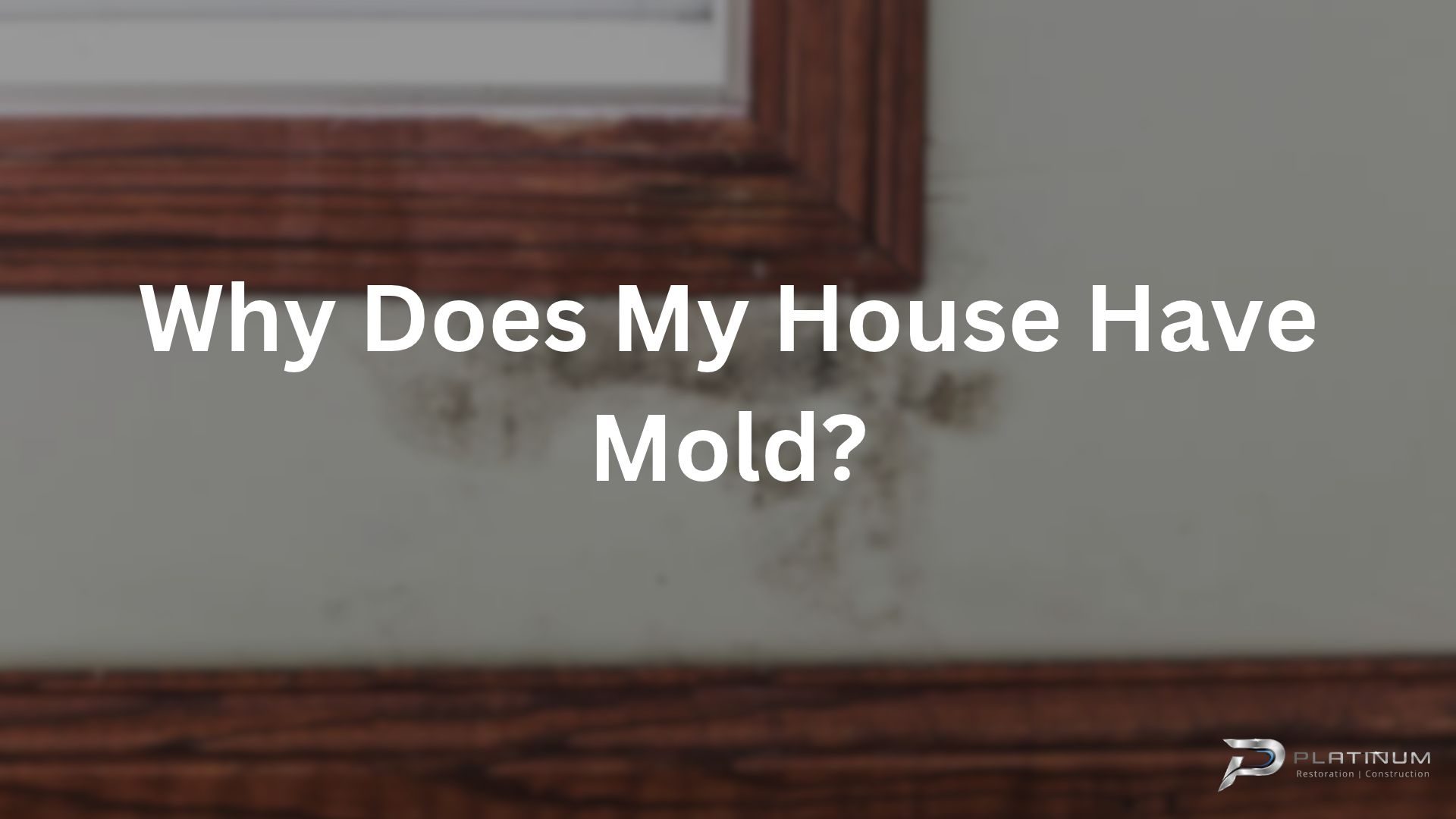
Mold doesn’t show up randomly. It develops in response to specific conditions, usually a combination of moisture, limited airflow, and an organic surface to grow on. Identifying which of these common causes applies to your situation is the first step toward actually resolving the problem rather than just cleaning the visible symptom repeatedly.
1. Poor Ventilation in Bathrooms and Kitchens
Bathrooms and kitchens generate significant moisture from showers, cooking, and dishwashing, and without adequate ventilation to clear that humidity, it lingers against walls and ceilings where it can support mold growth.
- Confirm your exhaust fans actually vent to the exterior rather than into an attic space, a common installation oversight
- Run exhaust fans during and for at least 15 to 20 minutes after showering or cooking
- If running fans consistently doesn’t seem to clear humidity, your fan may be undersized for the room, which is worth having a professional assess
2. Hidden Plumbing Leaks
A slow leak behind a wall or under flooring can feed mold growth for months before producing any visible sign, since the moisture often stays contained within the structure rather than appearing on a visible surface right away.
- Check under sinks and around appliance connections periodically for staining or dampness
- A persistent musty smell with no visible source often points to exactly this kind of hidden leak
- If you suspect a hidden leak but can’t locate it, professional moisture mapping can identify the source without unnecessary demolition
3. High Indoor Humidity
Even without an active leak, consistently high indoor humidity creates conditions favorable for mold, particularly in regions or seasons where closed-up homes trap moisture generated by everyday activities.
- Use a hygrometer to monitor indoor humidity, aiming to keep levels below 50 percent
- A dehumidifier in consistently humid areas, like a basement, can address ambient humidity that ventilation alone doesn’t fully resolve
- Consider whether a whole-house humidifier, if you have one, might be contributing to levels higher than necessary
4. Roof Leaks
Water entering through a damaged or aging roof can travel into attic spaces and ceiling cavities, often affecting areas well beyond the immediate entry point before it’s discovered.
- Periodically check the attic for staining on roof decking, a sign of past or current leaking
- After any significant storm, a quick attic check can catch new damage before it’s had time to cause extensive moisture buildup
- Addressing identified roof damage promptly limits how long moisture has to support mold growth in the surrounding structure
5. Condensation on Windows and Cold Surfaces
When warm, moist indoor air meets a cold surface, like a window pane or an uninsulated pipe, condensation forms. If that moisture isn’t managed, it can migrate into surrounding materials over repeated occurrences.
- Wipe down window condensation regularly rather than letting it sit on glass and frames
- Improving window insulation or considering double-pane options reduces the temperature differential that causes condensation
- Insulating exposed cold-water pipes in humid areas can reduce condensation forming on the pipe’s exterior
6. Past Water Damage That Wasn’t Fully Dried
A previous flood, leak, or other water event that was cleaned up without professional confirmation of complete drying can leave residual moisture that supports mold development well after the original incident seemed resolved.
- If a past water event was addressed with DIY drying rather than professional moisture meters, consider whether the area was genuinely confirmed dry or just appeared dry on the surface
- Any area with a known history of water damage deserves periodic monitoring for musty smell or discoloration, even if no issue was apparent immediately afterward
7. Poor Grading and Drainage Around the Foundation
Water that pools against a home’s foundation, due to improper grading or clogged gutters, can seep into basements or crawl spaces, creating persistent moisture in below-grade areas that are already naturally prone to higher humidity.
- Check that the ground slopes away from your foundation and that downspouts extend well away from the house
- Clean gutters regularly to prevent overflow that sends water directly down exterior walls toward the foundation
- Correcting grading issues, when significant, is often a project worth professional assessment given how much soil movement might be involved
8. Overcrowded or Poorly Ventilated Closets and Storage Areas
Closets and storage spaces, especially those on exterior walls or in basements, often have limited airflow, which combined with stored items blocking what little circulation exists, can create localized humid pockets favorable to mold.
- Avoid packing closets so tightly that air can’t circulate at all
- Periodically open doors to rarely used storage areas to allow some air exchange
- Check items stored directly against exterior walls for any dampness or musty smell, since this is a commonly overlooked spot
| Cause | Typical Location | Primary Fix |
|---|---|---|
| Poor ventilation | Bathrooms, kitchens | Confirm fans vent outside, use consistently |
| Hidden plumbing leaks | Behind walls, under flooring | Professional moisture mapping |
| High indoor humidity | Throughout home, esp. basements | Monitor and use dehumidifier |
| Roof leaks | Attic, ceiling cavities | Periodic inspection, prompt repair |
| Window/pipe condensation | Windows, cold-water pipes | Wipe regularly, improve insulation |
| Past unresolved water damage | Any previously affected area | Confirm genuine dryness, not just visual |
| Poor grading/drainage | Foundation, basement, crawl space | Correct grading, maintain gutters |
| Poorly ventilated storage | Closets, exterior-wall storage | Allow airflow, periodic checks |
A Real Example of Multiple Causes Combining
A homeowner in Carrollton had dealt with recurring mold in a basement storage closet despite cleaning it several times, assuming the closet’s general dampness was simply unavoidable given its below-grade location. Our assessment found this wasn’t one single cause but a combination of three: the closet was packed tightly with stored boxes blocking any airflow, the basement itself ran consistently higher humidity than ideal due to inadequate dehumidification, and a minor grading issue outside was allowing water to pool near that corner of the foundation during heavy rain.
Addressing the mold itself was straightforward, but preventing recurrence required tackling all three contributing factors together: reorganizing the closet to allow airflow, adding a dehumidifier to manage the basement’s baseline humidity, and correcting the grading issue outside. The homeowner later noted that treating each factor individually, as they’d assumed was happening with each cleaning attempt, had never been enough on its own, which is exactly why the mold kept returning despite repeated cleanup.
Why Identifying Your Specific Cause Matters
Cleaning visible mold without identifying which of these causes applies to your situation means you’re very likely to be cleaning the same spot again before long. Each cause requires a different fix, and as the Carrollton example shows, sometimes more than one cause is contributing simultaneously, which means a single fix might only partially resolve a recurring problem.
Platinum Service Group is a family-owned business with more than 20 years of experience serving Dallas-Fort Worth and the surrounding North Texas area. Our team holds IICRC, ACAC, and NADCA certifications, including mold remediation credentials, and is available 24/7 to identify which of these causes, or combination of causes, applies to your specific situation. Our step-by-step mold remediation process explains how we address both the mold and its underlying cause, and our guide to common mold locations at home can help you check for these causes yourself. You can contact us to schedule an assessment if mold keeps returning despite your own efforts.
Frequently Asked Questions
Can more than one of these causes be affecting my home at the same time?
Yes, as the Carrollton example illustrates. Recurring mold that doesn’t resolve despite addressing one obvious cause often indicates multiple contributing factors working together.
Is poor ventilation really enough on its own to cause mold?
In consistently humid environments or rooms with heavy moisture generation, like a bathroom without adequate exhaust, yes, poor ventilation alone can be sufficient to create mold-favorable conditions over time.
How do I know if my home’s mold is from a current cause or a past, unresolved one?
If the affected area has a known history of past water damage, especially if it was dried without professional confirmation, that history is worth considering even if no obvious current source is apparent.
Does fixing the cause guarantee the mold won’t come back?
Addressing the specific cause significantly reduces recurrence risk, though thorough cleaning or remediation of the existing mold is still necessary, since the cause and the existing growth are two separate things to resolve.
Should I assume my home has one of these causes even without visible mold?
Not necessarily, but if you notice a persistent musty smell, higher humidity than expected, or any of the home-based warning signs covered in our other guides, it’s worth considering whether one of these causes might be developing.
Mold always has a cause, and identifying which of these eight common factors, or combination of factors, applies to your home is what separates a lasting fix from a cycle of repeated cleaning. Addressing the root cause alongside any existing mold is the only way to actually stop the problem from returning.