
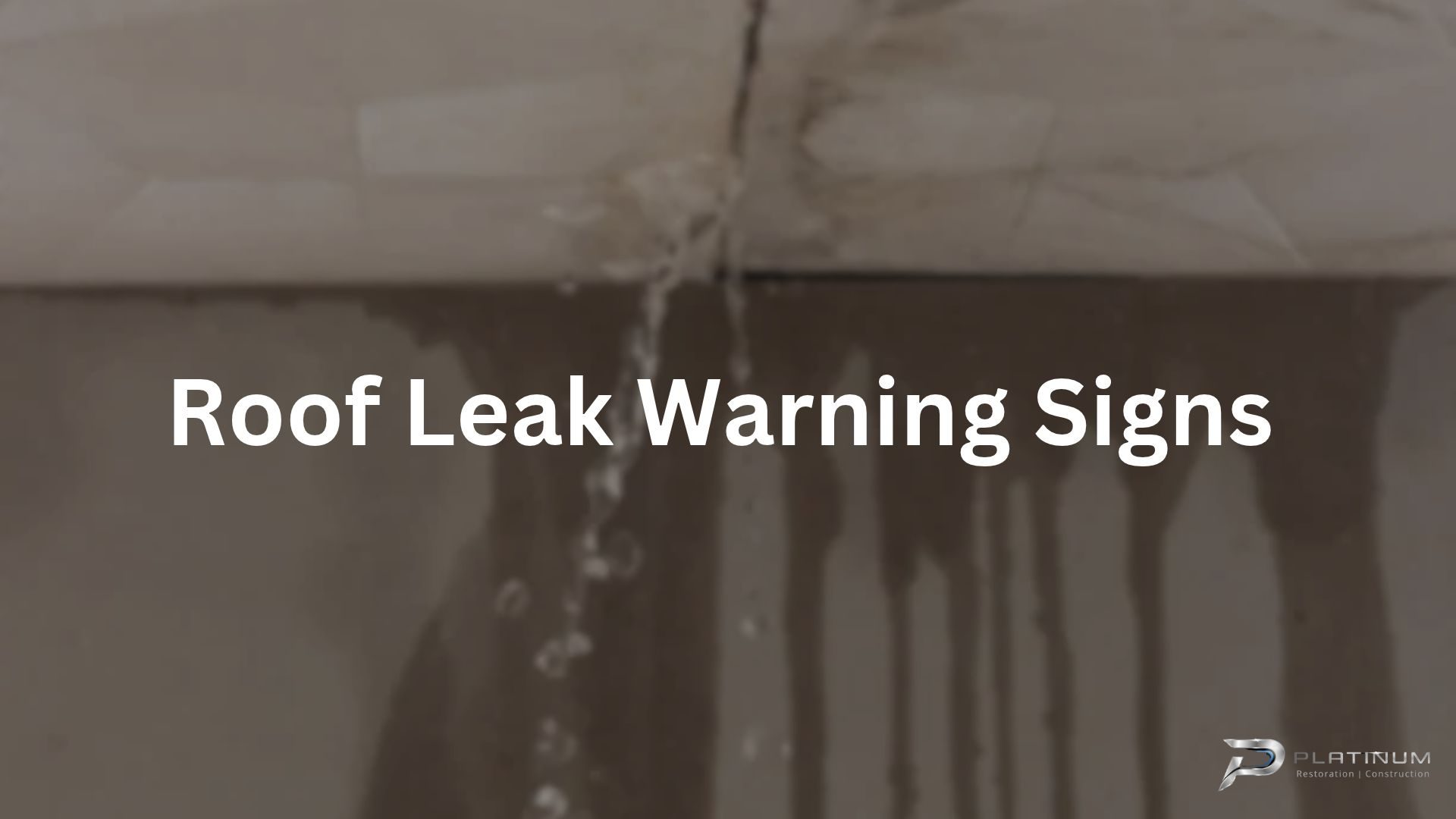
A roof leak rarely starts as the dramatic image most people picture, water pouring through the ceiling during a storm. More often, it begins quietly, a faint stain here, a slightly damp attic corner there, long before it becomes an active drip. Knowing the early warning signs, understanding what typically causes a leak, and having a clear emergency plan if one does become active all work together to limit how much damage a roof leak ultimately causes.
Early Warning Signs Worth Watching For
Catching a roof leak before it becomes an active drip means paying attention to subtler indicators.
- Water stains on ceilings or walls, even faint ones with soft, irregular edges rather than a sharp outline
- Peeling or bubbling paint, particularly on a ceiling, which often indicates moisture trapped behind the surface
- A musty smell in an upstairs room or attic that doesn’t have an obvious source
- Visible sagging in a ceiling section, which indicates the material has already absorbed significant moisture
- Dark spots or staining on attic insulation or the underside of roof decking, visible if you check the attic directly
- Missing, curled, or cracked shingles visible from the ground, which don’t guarantee a leak but indicate vulnerability
Active Leak Signs That Need Immediate Attention
Once a leak has progressed, these signs indicate water is actively entering your home right now.
- Visible dripping from a ceiling or light fixture
- A new, actively spreading wet patch on a ceiling or wall
- Water pooling on an attic floor or visible on attic insulation during or after rain
- Sounds of dripping water that you can hear but not immediately locate
Common Causes of Roof Leaks
Understanding what typically causes a leak helps with both prevention and, eventually, proper repair.
- Damaged or missing shingles, whether from age, wind, or storm impact, create direct entry points for water
- Flashing failures around chimneys, vents, skylights, and other roof penetrations are one of the most common leak sources, since these transition points are more vulnerable than the open field of the roof
- Clogged or damaged gutters can cause water to back up under the roof’s edge rather than draining away properly
- Ice dam formation, during rare hard freezes, can force water backward under shingles in a way normal drainage doesn’t account for
- Deteriorated roof underlayment or decking, often tied to a roof nearing the end of its expected lifespan, can allow water through even when shingles appear reasonably intact
- Improperly sealed roof penetrations, such as vent pipes or satellite dish mounts, that weren’t sealed correctly during installation or have degraded over time
| Cause | Typical Location | Why It Leaks |
|---|---|---|
| Damaged/missing shingles | Anywhere on roof field | Direct water entry point |
| Flashing failures | Around chimneys, vents, skylights | Vulnerable transition points |
| Clogged gutters | Roof edge | Water backs up under shingles |
| Ice dam formation | Roof edge, during hard freeze | Forces water backward under shingles |
| Deteriorated decking | Aging roof sections | Water penetrates despite intact shingles |
| Improperly sealed penetrations | Vent pipes, mounts | Seal degrades or was never adequate |
Emergency Steps for an Active Roof Leak
If you’re dealing with an active leak right now, these steps limit damage while you arrange for a permanent repair.
- Contain the water immediately. Place a bucket or large container directly under the drip, and if the leak is spreading across a ceiling area rather than dripping from one point, position multiple containers as needed
- Protect the ceiling from collapse risk if water is pooling above it. If you notice a ceiling bulging or sagging from trapped water, carefully puncture a small hole at the lowest point of the bulge with a screwdriver, directing water into a bucket below. This controlled release prevents a larger, uncontrolled ceiling collapse
- Move furniture and valuables away from the affected area, protecting anything that could be damaged by dripping or spreading water
- Lay down towels or tarps on flooring beneath and around the affected area to absorb water and protect flooring from prolonged exposure
- If you can safely access your attic, place a tarp or container at the specific leak entry point if it’s identifiable, which can help redirect water more precisely than relying on ceiling containment alone
- For exterior temporary protection, a tarp secured over the affected roof section can reduce water entry until permanent repairs are possible, though this step often requires a professional given the safety risk of roof access, especially during or after a storm
- Document the damage with photos throughout this process for insurance purposes
- Call a professional roofing and restoration team as soon as possible, since temporary containment measures only buy time, they don’t resolve the underlying problem
Why Temporary Measures Aren’t a Substitute for Professional Repair
The steps above limit damage in the short term, but they don’t address the actual source of the leak. A bucket catching water doesn’t stop water from continuing to saturate insulation, framing, and drywall around the leak point, which is why professional assessment and repair, both of the roof itself and any resulting interior water damage, need to follow as quickly as possible after emergency containment.
Why Even a Small, Early-Stage Leak Deserves Prompt Attention
A leak caught at the faint staining stage is dramatically less costly and disruptive to address than the same leak after it’s progressed to active dripping or ceiling sagging. Roof leaks rarely resolve or stay static on their own, they tend to worsen with each subsequent rain event as the entry point and the damage around it both expand.
Platinum Service Group is a family-owned business with more than 20 years of experience serving Dallas-Fort Worth and the surrounding North Texas area. Our team holds IICRC, ACAC, and NADCA certifications and is available 24/7 to respond to active roof leaks, addressing both the water damage inside your home and coordinating the roofing repair needed to stop the source.
If you’re dealing with water damage that’s already reached your ceiling or walls, our 7 steps to take after water damage guide covers the broader response process, and our fix a water-damaged ceiling guide walks through what repair involves once the leak itself is addressed. You can contact us 24/7 for emergency roof leak response.
Frequently Asked Questions
Is it safe to puncture a bulging, water-filled ceiling myself?
A small, controlled puncture at the lowest point of a bulge can prevent a larger, uncontrolled collapse, but if you’re not comfortable doing this yourself or the area is extensive, it’s safer to contain what you can with buckets and wait for professional help.
How can I tell if a ceiling stain is from an active leak or an old, already-fixed one?
A stain that’s growing, feels damp to the touch, or has appeared after recent rain indicates active water intrusion. A stable, dry stain with no recent changes may be from a past, already-resolved issue, though professional confirmation is the only way to know for certain.
Can a small roof leak really cause significant damage if I contain it with a bucket?
Yes, containment addresses the water you can see, but it doesn’t stop ongoing saturation of insulation, framing, and surrounding materials, which continues until the actual leak source is repaired.
Should I go on my roof myself to find the leak source?
This carries real safety risk, especially during or after a storm when surfaces may be wet or damaged. Professional roof inspection is generally the safer and more reliable way to locate the actual source.
How quickly does a roof leak typically get worse if not addressed?
This varies by cause and severity, but each subsequent rain event typically expands both the entry point and the interior damage, which is why prompt professional attention matters even for a seemingly minor, early-stage leak.
Roof leaks give warning before they become emergencies, and responding to the early signs, rather than waiting for an active drip, keeps the eventual repair smaller and less disruptive. When a leak does become active, quick containment combined with fast professional response limits how much damage accumulates before the actual source gets fixed.