
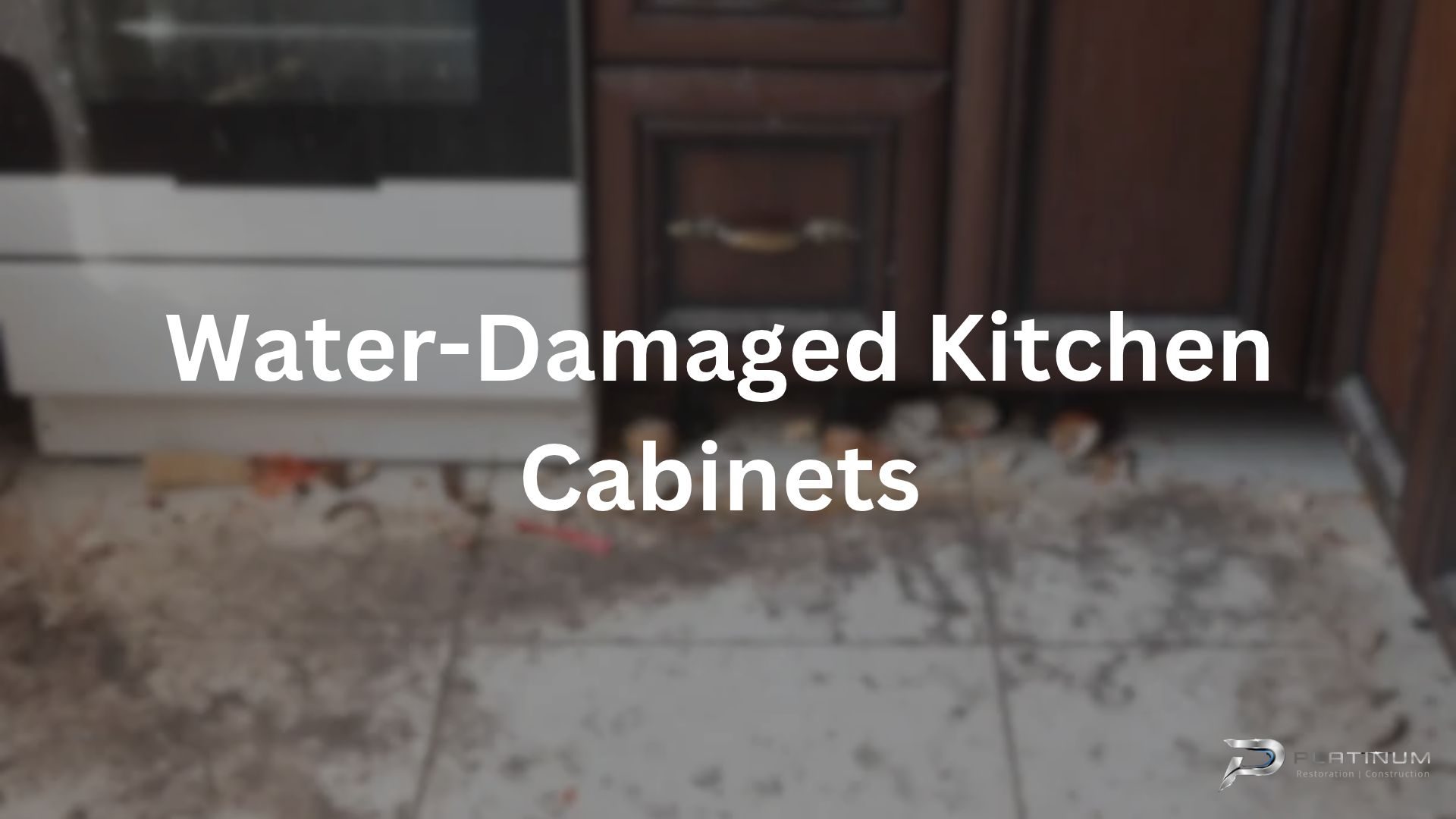
Under-sink cabinets take on water damage more often than almost any other cabinetry in a home, given their proximity to supply lines, drain connections, and garbage disposals, all potential leak sources sitting just inches from particleboard or wood that doesn’t handle moisture well. Whether a slow, undetected leak or a sudden pipe failure caused the damage, knowing how to assess it properly determines whether you’re looking at a straightforward cleanup or a cabinet replacement.
Why Under-Sink Cabinets Are Especially Vulnerable
Most kitchen cabinets, particularly the cabinet base and shelving, are constructed from particleboard or MDF with a veneer or laminate finish. These materials absorb water readily and swell when saturated, unlike solid wood, which handles occasional moisture exposure somewhat better. Combined with the fact that under-sink leaks are often slow and hidden behind stored cleaning supplies or trash bins, damage frequently progresses for weeks or months before anyone notices.
Assessing the Extent of the Damage
Before deciding on cleaning versus repair versus replacement, a clear assessment of what’s actually affected guides the right decision.
- Check the cabinet floor and lower side panels for swelling, which shows as a visibly thicker, bulging, or rippled surface compared to unaffected areas
- Press on affected material to gauge firmness. Material that’s still solid despite some swelling has a better chance of being salvaged than material that’s soft or crumbling
- Look for delamination, where the veneer or laminate surface is separating from the underlying particleboard, since this typically isn’t reversible
- Check for any musty smell or visible mold, both of which indicate the moisture exposure has been significant enough to warrant professional attention regardless of how the wood itself looks
- Assess how far the damage extends. Isolated swelling limited to the immediate area around the leak is a different situation than damage that’s spread across the entire cabinet base
When Cleaning Alone Is Sufficient
For a leak caught very early, before any swelling or structural change has occurred, simply drying the area thoroughly and addressing the leak source may be all that’s needed. This scenario is less common than people hope, since by the time cabinet damage becomes noticeable, some degree of material change has usually already occurred.
When Repair Makes Sense
Repair is a reasonable option when damage is limited and the cabinet’s structural integrity is largely intact.
- Minor swelling confined to a small area, without delamination or significant softness, can sometimes be addressed by replacing just the affected section of shelving or flooring within the cabinet rather than the entire unit
- Surface finish damage, where the laminate or veneer has lifted in a small spot but the underlying material is still solid, can often be repaired with proper surface restoration techniques
- Repair generally makes the most financial sense when the affected area is contained and the rest of the cabinet, including doors, face frame, and most of the structure, remains undamaged
When Replacement Is the Better Choice
Several signs point toward replacement being the more practical and cost-effective path.
- Significant swelling across a large portion of the cabinet base or multiple panels, since particleboard that’s absorbed substantial water rarely returns to its original shape or strength even once dried
- Visible mold growth within the cabinet structure, which often means porous material has absorbed spores in a way surface cleaning can’t fully resolve
- Delamination across significant portions of the cabinet, since reattaching veneer or laminate rarely produces a durable, lasting result
- Structural softness or crumbling material, indicating the particleboard has lost integrity beyond what repair can restore
- Damage extending beyond the cabinet itself into adjoining flooring or the cabinet’s connection to surrounding units, which often makes isolated repair impractical
| Damage Level | Typical Finding | Recommended Approach |
|---|---|---|
| Minimal | Slight dampness, no swelling | Dry thoroughly, address leak source |
| Minor | Small localized swelling, firm material | Repair affected section |
| Moderate | Swelling across larger area, some softness | Case-by-case, often partial replacement |
| Significant | Extensive swelling, mold, delamination | Full cabinet replacement |
Addressing the Underlying Leak Before Any Repair or Replacement
Regardless of which path you take for the cabinet itself, fixing the actual leak source comes first. Installing a repaired or replacement cabinet over an unresolved leak simply means the same damage will develop again, often faster the second time given any residual moisture already present in the surrounding area.
A Real Example of Repair vs. Replacement Decision-Making
A homeowner in McKinney discovered swelling in their under-sink cabinet floor after noticing the cabinet door wasn’t closing quite right anymore, a subtle sign they’d initially dismissed as the house settling. Investigation traced the issue to a slow leak at the garbage disposal connection that had likely been active for several months.
Assessment showed the cabinet floor and the lower six inches of both side panels had swelled significantly, with some softness present when pressed, though the upper cabinet structure, doors, and face frame remained unaffected. Given the extent of swelling and early signs of softening material, we recommended replacing the cabinet base and lower side panel sections rather than attempting a repair that likely wouldn’t hold up structurally, while preserving the doors and face frame, which were still in good condition. The disposal connection was repaired as part of the same process, and the partial replacement, rather than a full cabinet swap, kept costs more reasonable while still addressing the compromised material properly.
This case illustrates why a careful assessment, rather than an immediate assumption toward full replacement or an overly optimistic attempt at repair, leads to the most practical outcome for the specific extent of damage present.
Why a Professional Assessment Helps With This Decision
Distinguishing between cabinet material that can be salvaged and material that’s past the point of reasonable repair isn’t always obvious from a quick look, particularly when some portions of a cabinet are affected and others aren’t. A professional assessment, especially one that includes checking for moisture that may have spread beyond what’s visibly swollen, helps make this repair-versus-replace decision based on the actual extent of damage rather than guesswork.
Platinum Service Group is a family-owned business with more than 20 years of experience serving Dallas-Fort Worth and the surrounding North Texas area. Our team holds IICRC, ACAC, and NADCA certifications and handles both the water damage assessment and the cabinet repair or replacement work that follows an under-sink leak, available 24/7 for the initial water damage response. If you’re dealing with a leak that’s affected more than just the cabinet, our faulty plumbing causes guide covers common sources, and our small plumbing leak prevention checklist can help catch the next one earlier. You can contact us for an assessment of water-damaged cabinetry.
Frequently Asked Questions
Can swollen cabinet material ever return to its original shape once dried?
Generally not fully. Particleboard and MDF that have absorbed significant water typically retain some degree of swelling and reduced structural integrity even after drying completely.
Is it worth replacing just the cabinet base rather than the entire unit?
In many cases, yes, particularly when the doors and face frame remain undamaged, as in the McKinney example, since this approach addresses the compromised material while preserving what’s still in good condition.
How do I know if mold has developed inside a water-damaged cabinet?
A persistent musty smell or any visible discoloration beyond simple water staining are signs worth having professionally assessed, since mold within cabinet material often isn’t resolved by surface cleaning alone.
Should I replace the cabinet before or after fixing the actual leak?
Fix the leak first. Installing new or repaired cabinetry over an unresolved leak source means the same damage is likely to develop again.
Is this kind of damage typically covered by homeowners insurance?
This depends on your specific policy and whether the leak was sudden versus gradual. Our guide on homeowners insurance coverage covers this distinction in more detail.