
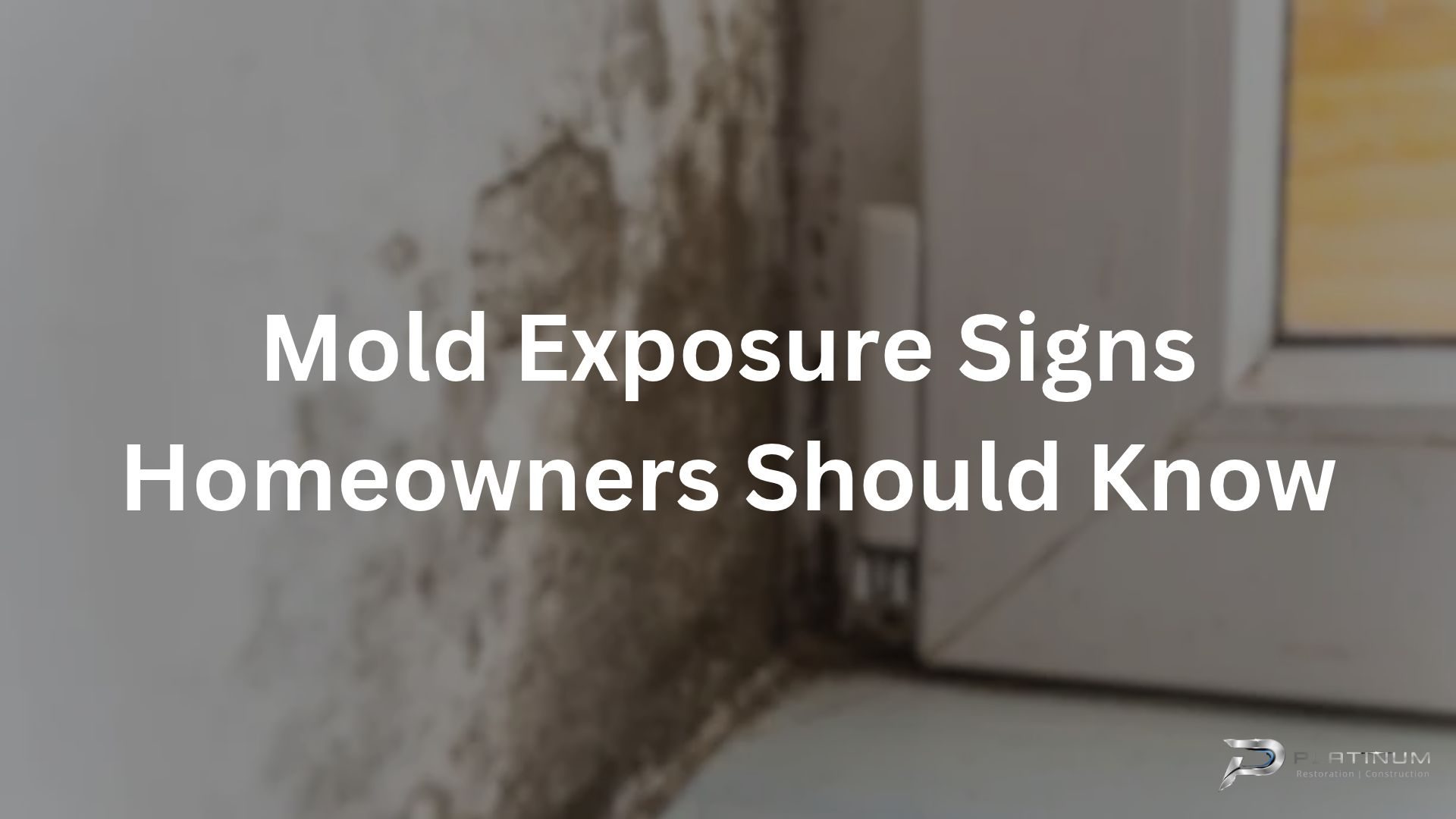
Mold exposure often develops gradually, tied to conditions in a home that build up over weeks or months rather than a single obvious event. Recognizing the signs that point to a mold presence, both in your living environment and in how you and your family feel, helps you address a problem early rather than after it’s had time to spread further.
Home-Based Signs: What to Look, Smell, and Feel For
The clearest indicators of a mold issue show up in the home itself, often before anyone connects them to a potential health concern.
Visible growth is the most direct sign, appearing as discoloration in shades of black, green, brown, white, or gray, often with a fuzzy or slightly raised texture. Common locations include bathroom corners, window sills, basement walls, and areas around past or present leaks.
A persistent musty odor that doesn’t go away with regular cleaning or airing out a space is one of the most reliable signs of mold, even when nothing is visible. This smell often indicates mold growing somewhere out of sight, such as inside a wall cavity or under flooring.
Water stains and discoloration on walls or ceilings, even faint ones, often represent the visible edge of a larger moisture issue, since water and the mold that can follow it frequently travel further than what’s immediately visible.
Peeling, bubbling, or cracking paint typically indicates moisture trapped behind a painted surface, a condition that often precedes visible mold growth even if none has developed yet.
Condensation patterns that are notably heavier in one specific area, such as one window consistently showing more moisture than others in the same room, can point to a localized humidity or ventilation issue that creates favorable mold conditions.
Soft or warped materials, including drywall that feels spongy when pressed, warped flooring, or cabinet bases that feel weakened, indicate that moisture has been present long enough to compromise the material itself.
| Home-Based Sign | What It Often Indicates |
|---|---|
| Visible growth | Active mold presence |
| Musty odor without visible mold | Hidden growth, often behind walls or under flooring |
| Water stains | Larger moisture issue than what’s visible |
| Peeling/bubbling paint | Trapped moisture, possible precursor to mold |
| Uneven condensation | Localized humidity or ventilation problem |
| Soft or warped materials | Sustained moisture exposure |
A Light Note on Health Considerations
Mold exposure affects people differently, and individual sensitivity varies considerably. Some people report no noticeable reaction even in an environment with visible mold, while others, particularly those with asthma, allergies, or compromised immune systems, may be more sensitive to exposure and report symptoms such as respiratory irritation or general discomfort in affected spaces.
This is general information rather than medical guidance, and mold-related health effects are an area where individual circumstances matter significantly. If you’re experiencing ongoing symptoms you suspect may be related to mold exposure in your home, speaking with a healthcare provider about your specific situation is the appropriate next step, since they can evaluate your symptoms in the context of your own health history.
Patterns Worth Paying Attention To
Beyond individual signs, certain patterns strengthen the likelihood that mold is a genuine factor worth investigating rather than a coincidence. A sign that’s consistently tied to a specific room or area of the home, rather than appearing randomly throughout the house, points more clearly toward a localized moisture source. Signs that intensify after rain, high humidity, or seasonal changes suggest a moisture-related cause rather than an unrelated issue. And a known history of past water damage in the home, especially if it was never professionally confirmed as fully dried, raises the likelihood that any of the signs above are connected to that earlier event rather than something unrelated.
What to Do When You Notice These Signs
If you’ve identified one or more of these home-based signs, the appropriate next step depends on what you’ve found. Visible mold on a small, isolated, non-porous surface can often be addressed with careful cleaning once the underlying moisture source is identified. A persistent musty smell without a visible source, signs that keep recurring despite cleaning, or any indication of soft or compromised building materials generally call for a professional assessment, since these patterns suggest mold has established itself beyond what a visual inspection alone can confirm.
Our guide on how mold is detected covers the difference between what you can check yourself and what professional tools can confirm, and our signs you need mold remediation guide goes further into deciding whether a situation calls for professional remediation.
Why Catching These Signs Early Matters
Mold and the moisture conditions that cause it tend to worsen with time rather than resolve on their own. A sign caught early, a faint smell, a small patch of discoloration, is almost always less extensive and less costly to address than the same issue discovered months later once it’s spread further or caused more significant material damage.
Platinum Service Group is a family-owned business with more than 20 years of experience serving Dallas-Fort Worth and the surrounding North Texas area. Our team holds IICRC, ACAC, and NADCA certifications, including mold remediation credentials, and is available 24/7 to investigate any of the signs covered here, using professional moisture mapping and testing to confirm what’s actually happening in your home. Our guide to common mold locations throughout the home is a useful companion for knowing where to look first, and you can contact us to schedule an assessment whenever one of these signs warrants a closer look.
Frequently Asked Questions
Is a musty smell always a sign of mold?
A persistent musty odor that doesn’t resolve with cleaning or ventilation is a strong indicator of mold, often hidden from view, though an inspection is the only way to confirm the actual cause.
How do I know if discoloration is mold or just normal wall aging?
Mold-related discoloration often has a fuzzy or slightly raised texture and tends to be accompanied by a musty smell, distinguishing it from general wear, which is typically flat and doesn’t carry an odor.
Can mold signs appear even without any known past water damage?
Yes, ongoing conditions like poor ventilation or chronic condensation can create mold-favorable conditions over time, independent of a single dramatic water event.
Should I be concerned if I notice these signs but feel completely fine?
Individual sensitivity to mold varies significantly, so the absence of symptoms doesn’t rule out mold being present. Home-based signs like visible growth or persistent odor are worth investigating regardless of how anyone in the home currently feels.
When should I talk to a doctor about possible mold-related symptoms?
If you’re experiencing ongoing symptoms you suspect may be connected to your home environment, discussing them with a healthcare provider who can evaluate your specific situation is the appropriate step, alongside addressing any identified mold source in the home itself.
Recognizing the home-based signs of mold exposure, visible growth, persistent odor, water stains, and compromised materials, gives you the earliest possible opportunity to address a problem before it becomes more extensive. Pairing that awareness with professional assessment when the signs point to something beyond a simple, visible patch is what keeps a manageable issue from growing into a larger one.