
How to File a Water Damage Insurance Claim
Find out how to handle a water damage insurance claim properly and get the payout you deserve.
How to Stay Safe During a Flood: Emergency Tips

Find out how to protect your family during a flood with simple safety measures and emergency preparedness advice.
Ice Dams: Prevention and Removal Guide for Winter
Find out how to handle ice dams with proper prevention and safe removal methods during cold weather.
Preventing Ice Dams: A Winter Roof Protection Guide
Ice dams can damage your roof and home. Learn simple ways to prevent them during cold weather.
What Happens When Water Damage Goes Untreated?
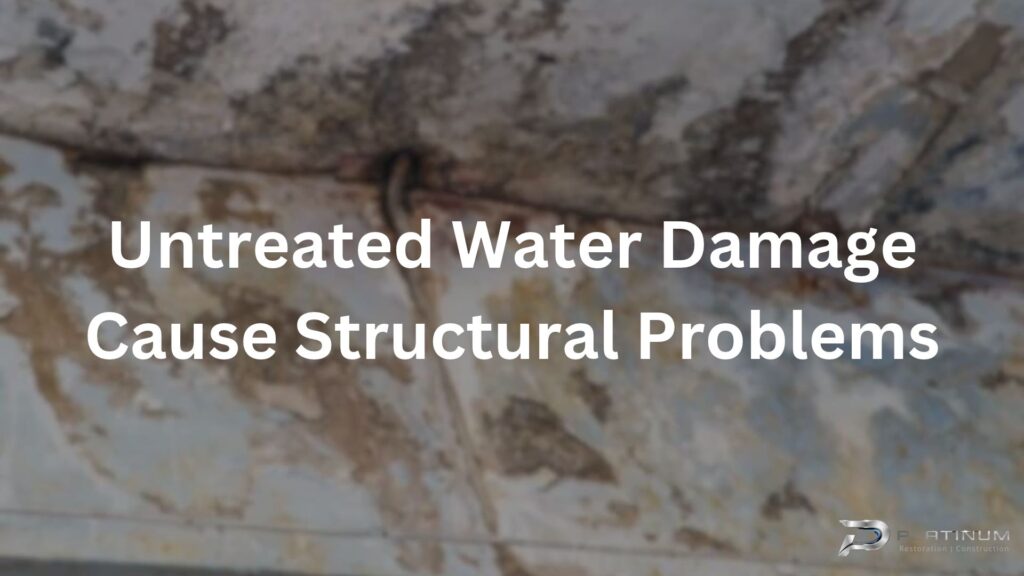
A damp spot on the ceiling or a patch of soft flooring can seem like a small problem. It’s easy to tell yourself you’ll deal with it later, or that it will dry out on its own. But water doesn’t stay small when it’s left alone. Given enough time, it can quietly weaken the very parts of your home that hold it up. So can water damage cause structural issues if it’s left untreated? Yes, and the longer it sits, the more likely and more serious those issues become. At Platinum Service Group, we see the difference between damage caught early and damage that has been ignored for months, and the gap in repair cost and scope is often large. Here’s how untreated water damage affects a home’s structure, how fast it happens, and what to watch for. Water Damage Restoration What Happens When Water Damage Goes Untreated? Our North Texas water damage team can inspect, dry, and restore your home, and walk you through exactly what your situation needs. 📞 Call (888) 436-2706 Licensed & Insured · Free Estimates The Short Answer Untreated water damage can absolutely lead to structural problems. Moisture trapped in wood, drywall, and subfloors causes rot, weakens materials, and invites mold and pests. Small, quickly dried leaks rarely cause lasting structural harm, but repeated or long term moisture exposure can compromise framing, floors, ceilings, and even foundations. Why Water Is So Hard On A Home Most homes are built from materials that don’t mix well with prolonged moisture. Wood framing, subflooring, drywall, and insulation are all absorbent to some degree. When they stay wet, a chain of problems begins. Water also moves. It travels along beams, wicks up through drywall, seeps under flooring, and settles in places you can’t see. By the time a stain appears, the moisture behind it has often spread much further than the visible mark. Our guide on common causes of water damage shows how many different sources can start this process. How Untreated Water Damage Affects Structure Over Time The damage builds in stages. The timeline varies with the amount of water and the materials involved, but the general pattern looks like this. Time Left Untreated What Typically Happens First 24 to 48 hours Materials absorb water, mold can begin to form 3 to 7 days Drywall softens, wood begins to swell and warp, odors develop 1 to 4 weeks Mold spreads, finishes fail, early wood decay can begin 1 to 3 months Wood weakens, subfloors soften, metal fasteners begin to corrode Several months or longer Rot, structural sagging, and significant material failure become likely These are general patterns, not guarantees. Continuous leaks speed things up, while a one time wetting that dries partially may progress more slowly. The Structural Components At Risk Wood Framing Studs, joists, and beams hold up walls, floors, and roofs. When wood stays wet, it becomes a target for fungal decay, commonly called rot. Rotted wood loses strength, and in serious cases it can no longer carry its intended load. Repairs may involve reinforcing or replacing structural members. Subfloors Subflooring sits beneath your finished floors and is often made from plywood or oriented strand board, both of which swell and delaminate when soaked repeatedly. Signs include soft spots, sagging, squeaks, and floors that feel bouncy underfoot. Our guides on fixing water damaged hardwood floors and swollen wood floors cover what repair involves. Drywall And Ceilings Soaked drywall softens and crumbles, and wet ceilings can sag and, in the worst cases, collapse, especially when insulation above is saturated and heavy. See how to fix a water damaged ceiling for what that repair looks like. Insulation, Fasteners, And Connectors Wet insulation becomes heavy, loses its ability to insulate, and holds moisture against framing, which keeps wood damp longer. Nails, screws, and metal connectors can also corrode over time, weakening the connections between structural pieces even when the wood itself looks intact. Foundations And Roof Structure Water around or under a foundation can cause soil movement, cracking, and settling, and these problems tend to develop gradually, which is why they’re often noticed late. Our article on when water damage affects your foundation explains the timeline. Persistent roof leaks can also rot decking, rafters, and trusses, and because attics are rarely checked, this damage can go unnoticed for a long time. Secondary Problems That Make It Worse Structural weakening rarely happens in isolation. Untreated moisture usually brings other issues along with it: Water damage been sitting too long?Get a free, no-obligation water damage estimate from our team. 📞 Call Now Warning Signs Of Structural Damage From Water Structural issues often announce themselves quietly before they become obvious. Signs worth taking seriously include: If you notice several of these together, particularly after a known leak or flooding event, have the area professionally assessed. Our guide on the structural warning signs of wall water damage goes into more detail. Why Small Leaks Can Do Big Damage It’s tempting to think only dramatic flooding causes structural harm. In reality, slow, hidden leaks can be some of the most destructive. A pinhole leak in a pipe inside a wall, a failing seal around a tub, or a worn roof flashing can drip for weeks or months without being noticed. The slow, steady moisture keeps wood damp the whole time, which is exactly the condition rot needs. Because the leak is small, there’s no obvious emergency. By the time a stain or smell shows up, the damage behind the surface may already be significant. See our pages on plumbing leaks and appliance leaks for common hidden sources. What Determines How Serious The Damage Becomes Not every water event leads to structural problems. Several factors decide the outcome: Can Structural Damage Be Reversed? It depends on how far it has progressed. If wood is only damp, thorough drying can prevent damage. If rot has begun, the affected wood generally can’t be restored to its original strength and usually needs to be repaired or replaced.
Do You Pay For An Initial Water Damage Inspection?
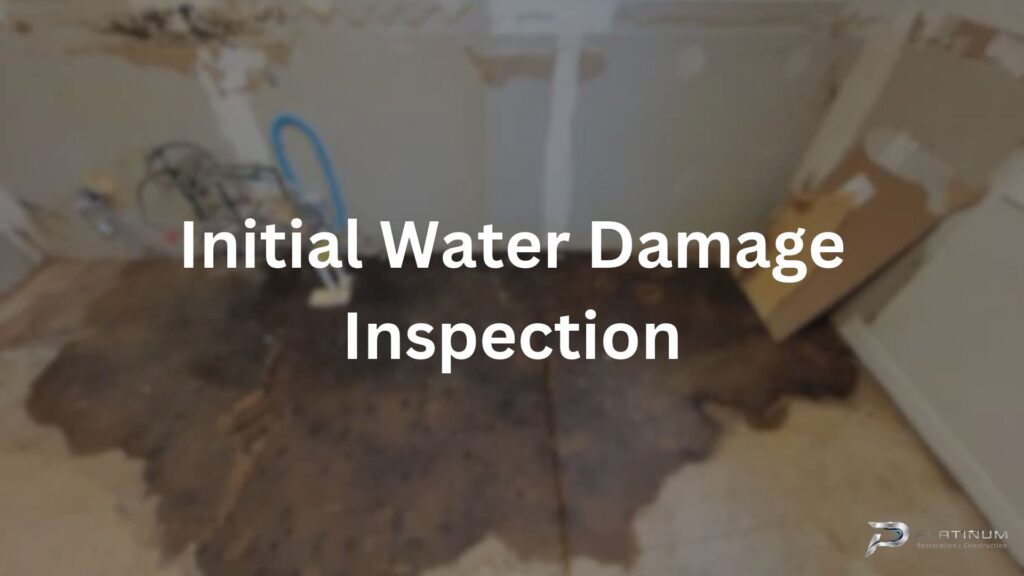
When water damage hits, the first thing most homeowners want to know is simple: what is this going to cost me? And the first cost question is usually about the inspection. Do you have to pay just to have someone look at the damage and tell you what’s going on? The answer depends on the company, and “free inspection” can mean different things from one business to the next. At Platinum Service Group, we offer free inspections and quotes for homeowners and businesses across Decatur, Bridgeport, Alvord, Boyd, and the rest of Wise County, and our team holds IICRC and ACAC certifications in water damage and mold work. Here’s how initial inspections work, what’s usually included, and how to avoid surprises. Water Damage Restoration Do You Pay For An Initial Water Damage Inspection? Our North Texas water damage team can inspect, dry, and restore your home, and walk you through exactly what your situation needs. 📞 Call (888) 436-2706 Licensed & Insured · Free Estimates What An Initial Inspection Is An initial inspection is the first professional look at your property after water damage. Its goal is to understand what happened, how far the water has traveled, and what it will take to fix it. During a typical inspection, a technician will: The inspection gives you and the restoration team a clear starting point, and it forms the basis of the quote you receive afterward. Our guide on how professionals detect hidden moisture explains the tools involved. Why Many Companies Offer It For Free Free inspections are common in the restoration industry for practical reasons. The inspection is how a company scopes the job, and it’s hard to give an accurate estimate without seeing the damage. Homeowners are also often comparing options during a stressful time, and removing the upfront cost makes it easier to get a professional opinion quickly. Speed matters too. Mold can begin within 24 to 48 hours, so anything that gets a professional on site sooner tends to help the outcome. Our article on why homeowners must act fast after water damage covers how quickly the situation changes. When A Fee Might Apply Not every inspection is the same, and some situations can involve a charge: Paid inspections aren’t a red flag by themselves. What matters is that the cost is explained clearly before work begins. If mold testing is part of your situation, our breakdown of mold inspection costs shows what to expect. What “Free Inspection” Can Actually Mean The phrase is used loosely, so it helps to ask what’s behind it. What You Hear What It May Mean Free inspection A visit and visual assessment with no charge Free estimate A written quote after the inspection, no charge Free with service Free only if you hire the company for the work Free consultation A phone or photo review before any visit Free testing Rare, and often limited to basic checks If a company says free, ask whether it’s free regardless of whether you hire them, or only when you move forward with their service. Neither approach is wrong, but you should know which one applies. What’s Typically Included, And What Isn’t A solid free inspection should still give you real value. You can generally expect a walkthrough of the affected areas, moisture readings to find water you can’t see, an explanation of what happened and how far it spread, clear information on what needs to be done and why, a written estimate or a clear timeline for receiving one, and honest answers to your questions. If the visit feels more like a sales pitch than an assessment, that’s worth noticing. Even a free inspection usually has limits. Things that often fall outside it include: Knowing the boundaries ahead of time keeps expectations realistic. Need a water damage inspection?Get a free, no-obligation water damage estimate from our team. 📞 Call Now Questions To Ask Before You Book A short list of questions can save you from unpleasant surprises: A reputable company will answer these without hesitation. If you’re still comparing providers, our guide on how to choose a water damage restoration company covers what to look for. Should You Wait For The Inspection To Start Drying? This is a common point of confusion. In an emergency, inspection and mitigation often happen together. If water is actively spreading, a good team will begin protective steps right away, such as extraction and setting up drying equipment, while also assessing the full scope. Waiting days for a formal estimate before taking any action can allow damage to grow. If you’re unsure, ask whether emergency mitigation can begin immediately while the detailed quote is prepared. Platinum Service Group also offers 24/7 water restoration services for exactly these situations. How Inspections Relate To Insurance Claims Many homeowners ask about the inspection fee because they’re thinking about their insurance claim. A few general points are helpful: We’re a restoration company, not an insurance advisor, so check your policy for what applies to you. What we can say is that thorough documentation from the very first visit tends to make the claim process smoother. Our guides on when to call insurance and restoration, how to file a water damage insurance claim, and restoration documentation tips walk through the process. A Note For Wise County Homeowners Water damage in this part of North Texas often follows storms, and a roof leak or window intrusion can leave moisture inside walls and attics long after the weather clears. Humid air slows natural drying, so what looks like a minor stain can hide a bigger problem. That’s why getting an inspection early, even when the damage seems small, is worth doing. In Decatur, Bridgeport, Alvord, and Boyd, a quick professional look can tell you whether you’re dealing with something simple or something that needs immediate attention. Our storm damage recovery plan explains what to do after severe weather, and because storm season can lead to a rush of calls, reaching out sooner generally gets you
Can Construction Near Your Home Cause Property Flooding?

Your yard has been dry for years. Then a new development goes up behind your fence, a neighbor regrades their lot, or a road project starts down the street, and suddenly the next heavy rain leaves water standing against your foundation. It’s a frustrating situation, and it raises a fair question: can nearby construction really cause flooding on your property? Yes, it can. Construction changes how land drains, and water follows the path of least resistance, which sometimes leads straight to someone else’s home. At Platinum Service Group, our team holds IICRC certification in Water Damage Remediation and Applied Structural Drying, and we respond to water damage across Decatur, Bridgeport, Alvord, Boyd, and Wise County where drainage has changed. The pattern is familiar. Here’s how construction can lead to flooding, what to watch for, and what you can do about it. Water Damage Restoration Can Construction Near Your Home Cause Property Flooding? Our North Texas water damage team can inspect, dry, and restore your home, and walk you through exactly what your situation needs. 📞 Call (888) 436-2706 Licensed & Insured · Free Estimates How Water Normally Moves Across Land Rain that falls on open ground soaks in, is taken up by plants, or flows slowly downhill into low areas, ditches, and creeks. Over time, a neighborhood settles into a pattern where water follows certain paths and soaks into certain areas. When construction changes the shape of the land, the surface, or the drainage structures, that pattern can shift. Water that used to spread out and soak in may now arrive in one concentrated rush. Ways Construction Can Cause Flooding Changing The Grade Of The Land Grading is one of the most common causes. When a builder raises, lowers, or reshapes a lot, the slope of the ground changes. If a neighbor’s lot is built up with fill, water that once drained across it may now run toward your property. If an adjacent lot is lowered, runoff may collect there and back up toward you. Even small changes in slope can make a big difference in where water goes. Adding Pavement, Roofs, And Hard Surfaces New buildings, driveways, parking lots, and roads replace absorbent ground with surfaces water can’t soak into. More rain becomes runoff, and it arrives faster. Removing Vegetation And Compacting Soil Plants slow runoff and take up water through their roots. Clearing trees, brush, and grass removes that protection and increases erosion. Heavy equipment also compresses soil, which reduces how much water it can absorb. In North Texas, where clay soil already absorbs slowly, compacted ground behaves even more like pavement. Blocking Or Redirecting Drainage Paths Construction can bury, fill, or reroute swales, ditches, culverts, and natural channels. If a path that carried water away from your property is blocked, that water has to go somewhere else, and sometimes that means your yard. Sediment Clogging Drains Construction sites produce a lot of loose soil. During rain, sediment can wash into storm drains, culverts, and creeks, reducing their capacity. A drain that used to handle a storm easily may overflow when it’s partly blocked. Overloading Existing Drainage New development often connects to drainage systems designed for less runoff. When more water enters the system than it can carry, streets and low lying properties can flood. Detention ponds are meant to reduce this, but if they’re undersized or poorly maintained, problems show up downstream. Broken Pipes, Pumping, And Failed Controls Excavation can break water lines, sewer lines, or irrigation pipes, releasing large volumes of water quickly. Some projects pump groundwater out of excavations and discharge it onto neighboring ground. Silt fences, berms, and temporary drainage controls can also be overwhelmed by a heavy storm, sending sediment and water onto nearby property. Common Construction Changes And Their Effects Construction Change What Happens To Water Regrading or adding fill Runoff is redirected toward neighboring lots New pavement and roofs More runoff, arriving faster Tree and vegetation removal Less absorption, more erosion Soil compaction Reduced infiltration Filled or blocked drainage paths Water backs up or reroutes Sediment in drains and creeks Reduced drainage capacity Excavation damage Pipe breaks and unexpected water release Signs Nearby Construction May Be Affecting Your Property Watch for changes that start around the same time as construction: If several of these appear after a project begins, there’s a good chance the two are connected. How To Tell Construction Is The Cause Flooding can have several causes, so gather evidence before drawing conclusions: A civil engineer or drainage specialist can help confirm what’s going on. Construction runoff flooding your property?Get a free, no-obligation water damage estimate from our team. 📞 Call Now What To Do If You Think Construction Is Causing Flooding Document Everything Good records matter more than anything else: Talk To The Contractor And Local Officials A calm, documented conversation often goes further than a confrontation. The project team may not realize runoff is reaching your property and may be able to adjust drainage controls or clear blocked areas quickly. Cities and counties also have offices that oversee grading, stormwater, and floodplain rules, and they can review permits and require corrections if drainage controls aren’t working. Your local floodplain administrator or public works office is a good place to start. Get Professional And Legal Advice A civil engineer or drainage specialist can evaluate how water is moving and recommend solutions. If damage has occurred and the problem isn’t resolved, an attorney who handles property or construction issues can explain your options. We’re a restoration company, not a law firm, and rules about diverting water onto neighboring property vary by location. Check Your Insurance Standard homeowners policies typically don’t cover flooding, but coverage can vary by cause and policy. Talk with your insurer early, and keep photos and records to support any claim. Our overview of homeowners insurance and property damage explains typical coverage patterns. How To Protect Your Property Whether or not you can change what’s happening next door, you can strengthen your own defenses: If
Does Water Damage Restoration Include Reconstruction?
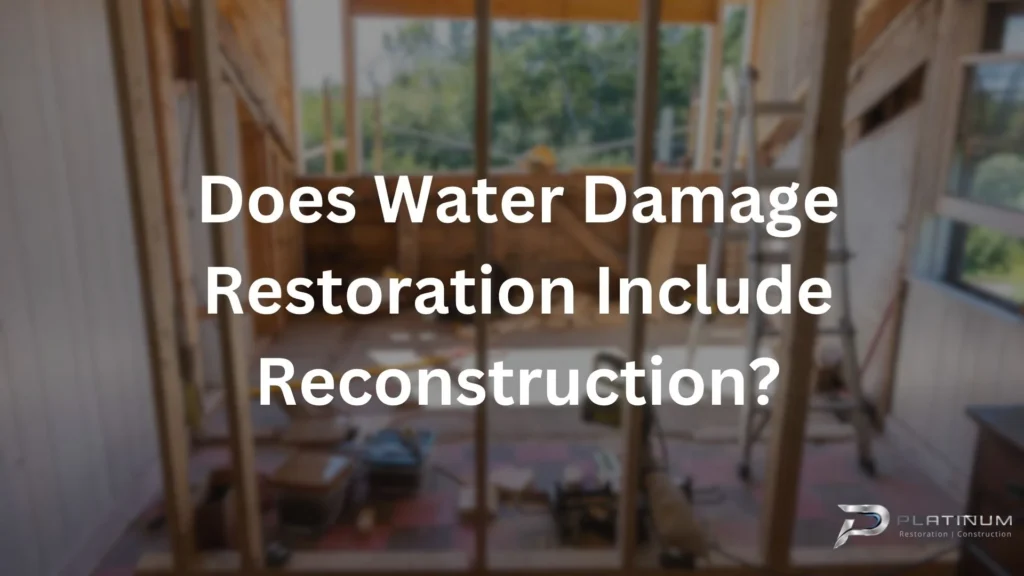
Many homeowners assume that hiring a water damage restoration company covers the whole job, from the first drying fan to the final coat of paint. Sometimes that’s true. Sometimes the company stops after drying and you’re left to find a contractor for the rebuild. The difference matters, so it’s worth knowing what to ask before work begins. At Platinum Service Group, our team holds IICRC certification in Water Damage Remediation and Applied Structural Drying, plus ACAC certification in Mold Remediation. We handle both restoration and residential remodeling, so many projects across Decatur, Bridgeport, Alvord, Boyd, and Wise County stay under one roof. Here’s how the terms differ. Water Damage Restoration Does Water Damage Restoration Include Reconstruction? Our North Texas water damage team can inspect, dry, and restore your home, and walk you through exactly what your situation needs. 📞 Call (888) 436-2706 Licensed & Insured · Free Estimates The Short Answer It depends on the company. Water damage restoration traditionally covers stopping the damage, removing water, and drying the structure. Reconstruction is the rebuilding that follows, such as new drywall, flooring, and paint. Some companies do both, and some only do the first part. Mitigation, Restoration, And Reconstruction The industry uses several overlapping terms, which causes much of the confusion. Term What It Means Typical Work Mitigation Stopping further damage Water extraction, drying, removing wet materials Restoration Cleaning and returning the property to its prior state Drying, cleaning, minor repairs Reconstruction Rebuilding what was removed or destroyed Drywall, framing, flooring, cabinets, paint Some companies use “restoration” to mean everything, and others use it only for drying and cleaning. Asking exactly what’s included avoids surprises. For a closer look at the first phase, see what water restoration companies do. What Each Phase Usually Includes Restoration Phase Reconstruction Phase Emergency response and safety assessment Replacing drywall and insulation Stopping the water source Installing new flooring and baseboards Water extraction Repairing cabinets and countertops Removing unsalvageable materials Painting and texture matching Structural drying and moisture monitoring Structural repairs to framing or subfloor Cleaning, odor control, and documentation Final cleaning and walkthrough Why The Order Matters Reconstruction should never begin until drying is verified. Rebuilding over damp materials traps moisture and invites mold within days. That’s why mitigation always comes first, even though the rebuild is what homeowners are eager to see. Our water damage repair process guide walks through the full sequence. One Company Vs Separate Contractors Both approaches can work well, but each has tradeoffs. Approach Advantages Possible Drawbacks One company does both One point of contact, smoother handoff, consistent documentation, one party accountable Fewer rebuild bids to compare Restoration company plus separate builder Freedom to choose, competitive bids Communication gaps, scheduling delays, finger pointing if problems appear When two companies are involved, someone needs to confirm the area is truly dry before the builder starts. That handoff is where problems often creep in. Questions To Ask Any Company A contract that ends when drying is complete, or an estimate focused only on equipment, often signals a mitigation-only company. That isn’t necessarily a problem, but it should be clear before you sign. Our guide on how to choose a water damage restoration company covers more of what to ask. Need water damage restoration and a rebuild?Get a free, no-obligation water damage estimate from our team. 📞 Call Now Insurance And The Two Phases Insurers often treat mitigation and reconstruction as separate parts of a claim. Emergency mitigation is typically evaluated quickly, while reconstruction costs are assessed after the full scope is known. Coverage varies by policy, so confirm details with your insurer. Our overview of how water damage claims work explains the process, and good restoration documentation from the first phase supports the rebuild estimate. How Long Reconstruction Takes Rebuilding takes longer than most homeowners expect. Scope General Rebuild Timeline Small area, drywall and paint A few days One or two rooms with flooring One to two weeks Multiple rooms or structural repair Several weeks Large loss with cabinetry and finish work A month or more Material availability, permits, and insurance approvals can stretch these ranges. Drying itself also takes time, as explained in how long water damage restoration takes. What Homeowners Often Overlook Local Considerations In Wise County Storm damage in Wise County often involves both water and structural issues, such as roof leaks or damaged ceilings, so reconstruction is part of many local projects. Humid weather can also stretch drying times, which affects when rebuilding can safely begin. In Decatur, Bridgeport, Alvord, and Boyd, a coordinated plan where drying, roof repairs, and interior rebuilding happen in the right order works best. When storms affect many homes at once, contractor availability tightens, which makes a single team handling both phases a practical advantage. A Case Study: One Team, Start To Finish A homeowner in the area had a roof leak after a storm that soaked a bedroom ceiling, insulation, and carpet. Our crew extracted the water, removed the wet insulation and ceiling drywall, and dried the room with commercial equipment. Once moisture readings confirmed the framing was dry, the same team moved into reconstruction. We installed new insulation and drywall, matched the ceiling texture, replaced the carpet, and repainted, after the roof leak was repaired. The homeowner dealt with one project manager the whole way, and the job took a little under three weeks. A neighbor with a similar leak hired a mitigation-only company, then spent a week finding a contractor. The builder started before anyone re-checked moisture, and a musty smell appeared a month later. The takeaway: restoration and reconstruction work best when they’re coordinated and someone confirms dryness before rebuilding. Frequently Asked Questions Free, No-Obligation Estimate Ready to Fix Your Water Damage? Talk to our water damage restoration team today, or request a free estimate and we’ll get back to you quickly. 📞 Call (888) 436-2706 Get a Free Estimate Licensed & Insured · Serving North Texas Final Thoughts Water damage restoration and reconstruction are connected but not
Which Building Materials Must Be Removed After Water Damage?
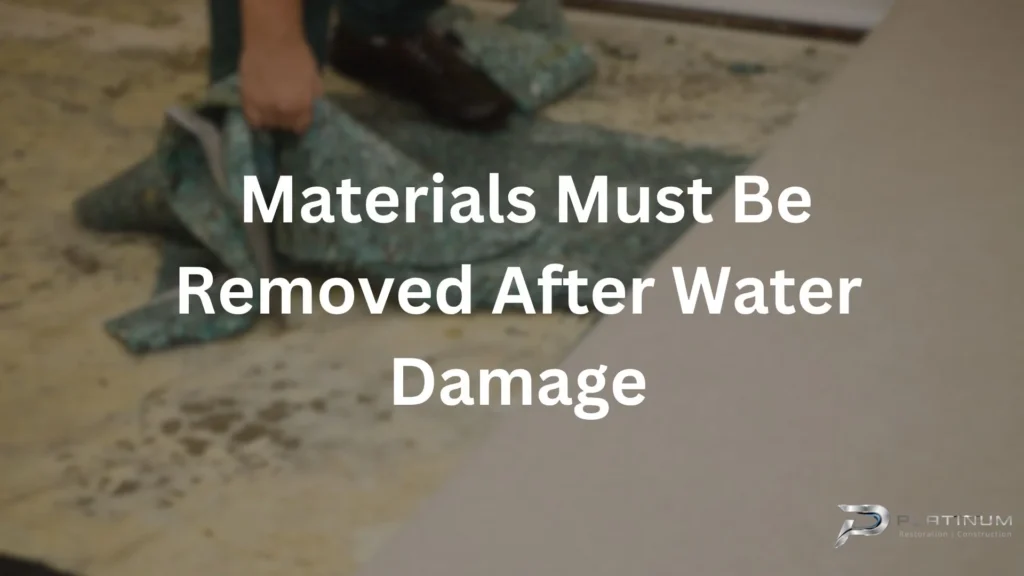
One of the hardest parts of water damage for homeowners is hearing that materials that look fine need to come out. Pulling out intact drywall or carpet padding can feel wasteful. But some materials can’t be dried safely, and leaving them in place is how mold and lingering odors take hold. At Platinum Service Group, our team holds IICRC certification in Water Damage Remediation and Applied Structural Drying, and our restoration team helps homeowners across Decatur, Bridgeport, Alvord, Boyd, and Wise County work through these decisions. Here’s how it’s decided and which materials usually stay or go. Water Damage Restoration Which Building Materials Must Be Removed After Water Damage? Our North Texas water damage team can inspect, dry, and restore your home, and walk you through exactly what your situation needs. 📞 Call (888) 436-2706 Licensed & Insured · Free Estimates The Short Answer Porous, absorbent materials that stayed wet for a while, or that were soaked with contaminated water, usually need to be removed. Hard, non-porous materials can often be cleaned and dried in place. The deciding factors are the material type, the water type, and how long it stayed wet. How The Decision Is Made Three questions drive nearly every decision: Question Why It Matters What is the material? Porous materials absorb water, hard ones don’t What kind of water was it? Contaminated water makes porous materials unsafe to keep How long was it wet? Mold can begin within 24 to 48 hours A fourth factor is whether the material can be dried all the way through. If moisture is trapped where air can’t reach, removal is often the only reliable option. Water Type Changes Everything Water Category Example Effect On Materials Clean water Supply line leak Many materials can be dried if acted on quickly Gray water Washing machine overflow More materials need removal Black water Sewage or floodwater Porous materials are almost always removed Materials That Usually Need To Be Removed Carpet Padding Padding acts like a sponge and is very hard to dry fully. It’s almost always removed after a significant water event, even when the carpet on top can be saved. Wet Insulation Insulation loses effectiveness when soaked and holds moisture for a long time, so it’s typically removed and replaced. Saturated Drywall Drywall’s paper facing absorbs water and supports mold. Soaked sections, especially lower ones, are often cut out, and since moisture wicks upward past the visible waterline, a buffer is usually removed too. Our guide to the signs of wall water damage shows what to watch for. Swollen Pressed Wood Cabinet bases, shelving, and particleboard subfloor swell and break down when wet, and they rarely return to their original strength. Materials With Contamination Or Mold Anything porous that touched sewage or floodwater is generally removed. Mold on porous materials usually runs deeper than the surface, so affected drywall and ceiling materials typically come out as well. Our article on whether mold from water damage is dangerous explains why this matters. Wet Ceiling Tiles And Textured Ceilings Tiles that sag or stain usually need replacing, and textured ceilings are hard to dry without damage. See our guide on how to fix a water damaged ceiling for what repair involves. Materials That Can Often Be Saved Material Outlook Note Solid hardwood Sometimes saved May cup or warp and need refinishing Tile, stone, concrete Usually saved Subfloor beneath still needs checking Solid wood framing Usually saved Tolerates moisture better than pressed wood Carpet (clean water, fast response) Sometimes saved Padding usually still goes Vinyl and laminate Varies Water often gets trapped underneath Metal, glass, plastic Saved Cleaned and kept For flooring specifically, see how to fix water damaged hardwood floors. Wondering what has to come out after water damage?Get a free, no-obligation water damage estimate from our team. 📞 Call Now Quick Reference Guide Material Usually Removed? Why Carpet padding Yes Absorbs water, can’t be dried fully Insulation Yes Holds moisture, loses effectiveness Saturated drywall Usually Paper facing supports mold Particleboard Usually Swells and weakens Ceiling tiles Usually Stains, sags, supports mold Solid hardwood Sometimes saved Depends on exposure length Tile and stone Usually saved Non-porous surface Solid wood framing Usually saved Can be dried and cleaned Why Removal Is Sometimes Necessary Removal can feel like added cost, but it often prevents bigger costs later: Removal is usually targeted, not a gutting of the whole room. Drywall is typically cut a set height above the water line, baseboards are taken off carefully so they can sometimes be reused, and insulation is pulled only from the affected cavity. Warning Signs A Material Needs To Go Questions To Ask Your Restoration Team If you’re still comparing providers, our guide on how to choose a water damage restoration company covers what to look for. Insurance And Documentation Many insurers want photos and notes showing what was removed and why. Before materials come out, take photos, and ask for records of moisture readings and the extent of removal. Our restoration documentation tips explain what to keep, and our overview of homeowners insurance and property damage covers typical coverage patterns. Confirm the details with your own insurer. Wise County Considerations North Texas humidity makes removal decisions more conservative than they might be in a dry climate. Materials that would air dry elsewhere often stay damp longer here, especially after storms that raise humidity for days. Homes in Decatur, Bridgeport, Alvord, and Boyd with roof leaks often have wet insulation and ceiling materials that look fine from below but hold moisture above. Because humid air slows evaporation, trying to save marginal materials carries more risk of mold in this region. A Case Study: The Wall That Looked Fine A homeowner in the area had a water heater leak that soaked part of a utility room and the wall behind it. After cleanup, the drywall looked and felt dry, and the homeowner asked whether we really needed to remove any of it. Moisture readings told a different story. The lower two
How Do You Know Your Home Is Truly Dry?
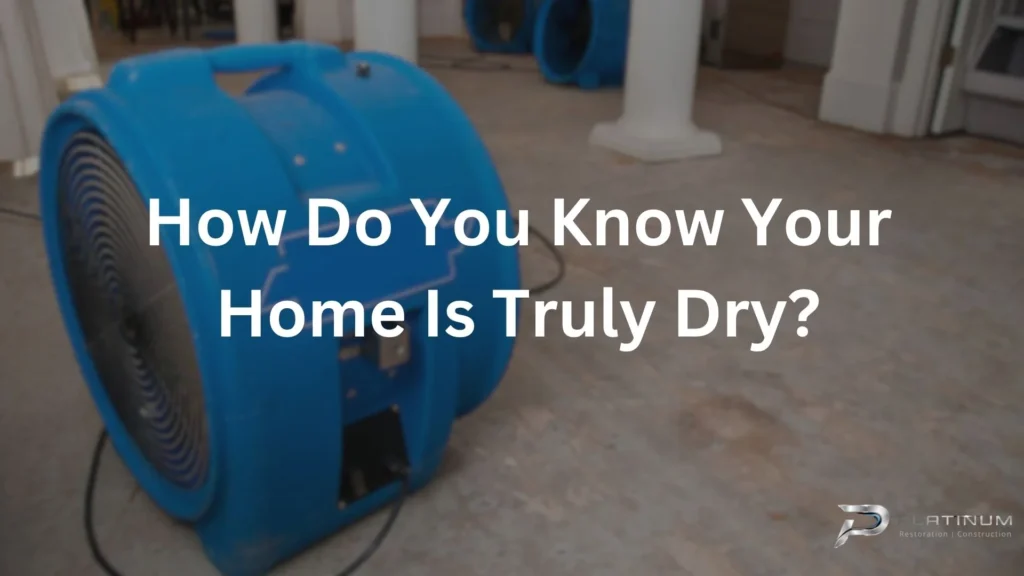
After water damage, the floors feel dry, the fans have been running for days, and everything looks normal. It’s tempting to call the job finished and start repairs. But materials can feel dry on the surface while still holding water inside, and that hidden moisture is what causes mold, warping, and repeat damage. At Platinum Service Group, our team holds IICRC certification in Applied Structural Drying and Water Damage Remediation, and confirming dryness is one of the most important parts of every restoration project we handle across Decatur, Bridgeport, Alvord, Boyd, and Wise County. Here’s how it works in plain terms. Water Damage Restoration How Do You Know Your Home Is Truly Dry? Our North Texas water damage team can inspect, dry, and restore your home, and walk you through exactly what your situation needs. 📞 Call (888) 436-2706 Licensed & Insured · Free Estimates Why Dry To The Touch Isn’t Enough Drywall, wood framing, subfloors, and insulation can hold moisture deep inside long after the surface feels fine. Your hand can only judge what’s on the outside. Check What It Tells You What It Misses Touch Surface dampness Moisture inside materials Sight Stains and warping Hidden wet areas Smell Possible moisture or mold Exact location and amount Measurement Actual moisture in materials Very little, when done properly This is one of the main risks of DIY water damage cleanup, since a surface that feels dry can give a false sense of security. How Professionals Confirm Drying Method What It Does Moisture meters Measure water inside drywall, wood, and flooring without tearing anything apart Dry reference readings Compare wet areas to an unaffected spot in the same home Humidity tracking Confirm the air is dry enough for materials to keep releasing moisture Thermal imaging Reveal cool, damp patches behind surfaces Small inspection camera Check inside wall cavities through a tiny opening Technicians check the same spots again and again, so they can watch the numbers drop day by day instead of relying on a single reading. The Confirmation Process Step By Step Signs Drying Is Working Signs Drying Isn’t Finished Warning Sign What It Could Mean Musty smell that lingers Moisture or mold still present Baseboards or flooring that cup or warp Water still inside materials Paint that bubbles or peels Moisture behind the surface Walls that feel cool or damp Moisture still trapped Humidity that stays high Air isn’t drying properly New stains appearing days later Hidden water still spreading If you notice any of these, our guide to the signs of wall water damage can help you decide whether it’s time for another inspection. Why Confirming Dryness Matters Skipping this step is one of the most common reasons repairs fail. New drywall, flooring, and paint can trap moisture, and mold can start growing within 24 to 48 hours in the right conditions. Not sure your home is really dry?Get a free, no-obligation water damage estimate from our team. 📞 Call Now How Long Does Drying Take? Situation Typical Drying Time Small, quickly handled spill 1 to 3 days Wet carpet, removed promptly 2 to 4 days Water in walls and subfloor 3 to 5 days or more Large flooding with soaked materials 5 days or longer These are general ranges, and the only way to know the real answer for your home is to measure it. Our guide on how long water damage restoration takes covers the full timeline. Why Humidity Makes This Harder In North Texas Wise County’s humidity makes confirmation especially important. When the air outside is already damp, as it often is after a storm in Decatur, Bridgeport, Alvord, or Boyd, materials release moisture more slowly. Open windows can bring in more moisture than they remove, and a home can feel dry in the morning and damp again by afternoon. That’s why checking readings over several days, rather than once, matters more here than in a drier climate. What Counts As Dry Enough To Rebuild? Rebuilding should wait until: If any of these aren’t met, rebuilding is premature, even if the room looks ready. Questions To Ask Your Restoration Team If you’re still comparing providers, our guide on how to choose a water damage restoration company explains what to look for. Mistakes To Avoid Documentation You Should Receive Record Why It Helps Starting moisture readings Shows how far the water spread Daily progress readings Proves drying is moving forward Final readings Confirms the area is dry Photos Shows conditions before and after Equipment log Shows how long drying ran Our restoration documentation tips explain why these records protect you with insurers and future buyers. Frequently Asked Questions Free, No-Obligation Estimate Ready to Fix Your Water Damage? Talk to our water damage restoration team today, or request a free estimate and we’ll get back to you quickly. 📞 Call (888) 436-2706 Get a Free Estimate Licensed & Insured · Serving North Texas Final Thoughts A home that feels dry isn’t necessarily dry. Measurements, repeated over several days and checked in hidden spots, are what confirm that water damage is truly behind you. In a humid area like Wise County, that extra care keeps mold, warping, and repeat repairs from showing up later.