
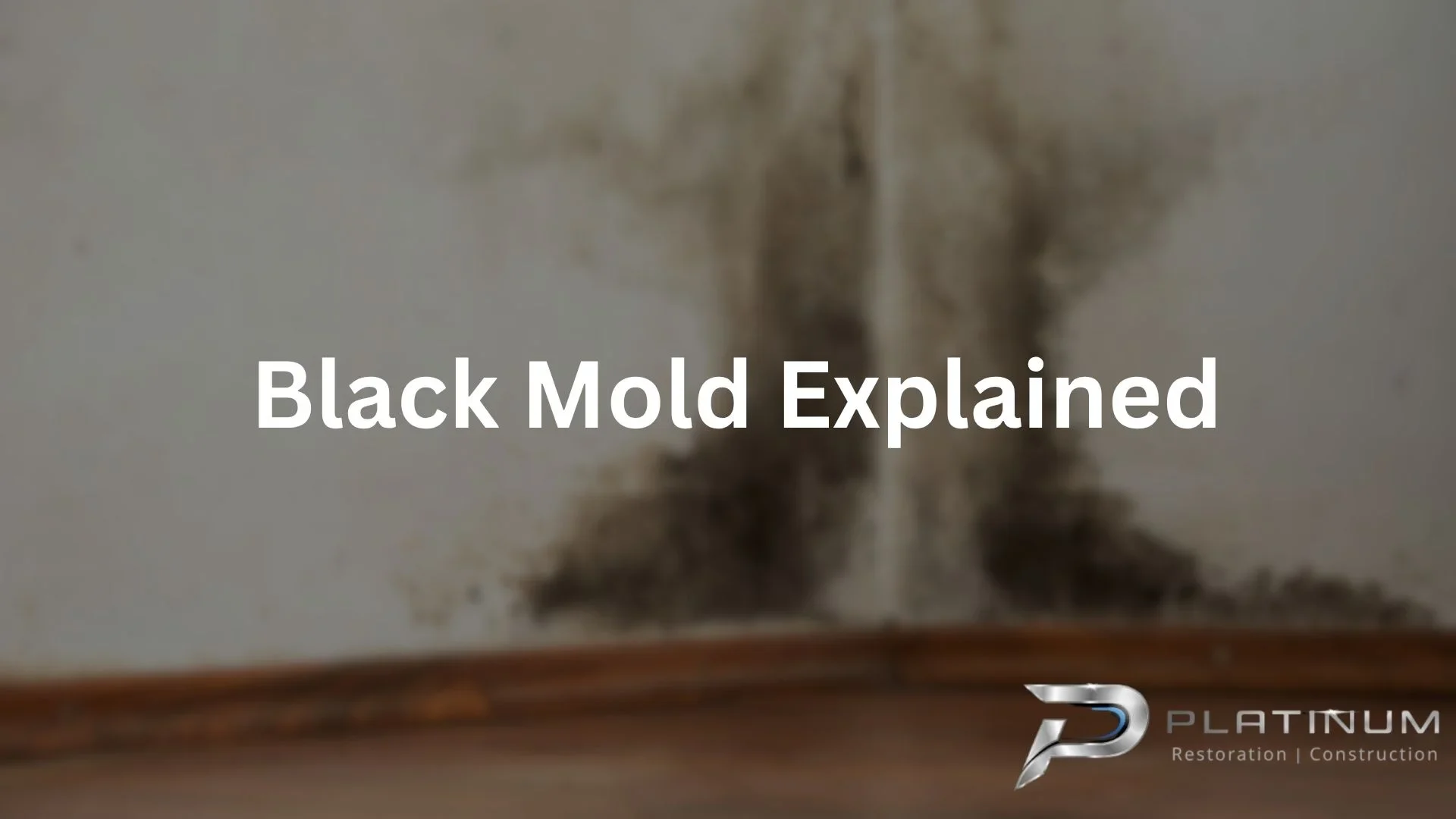
Black mold has a reputation that tends to swing between two extremes, either dismissed as no big deal or treated as an emergency requiring immediate evacuation. The reality sits somewhere in between. Black mold is a legitimate concern worth taking seriously, but understanding what actually causes it, what it does, and how to address it properly makes the difference between an overreaction and an appropriate response.
This guide covers what black mold is, the conditions that allow it to grow, general health considerations, how removal works depending on severity, and practical steps to prevent it from coming back.
What Is Black Mold?
“Black mold” commonly refers to Stachybotrys chartarum, a dark greenish-black mold species that grows on materials with high cellulose content, like drywall, wood, and paper-backed insulation, when those materials stay damp for an extended period. It’s worth noting that plenty of mold species appear black or dark in color without being Stachybotrys specifically, which is why visual identification alone isn’t reliable. A lab test is the only definitive way to confirm which species is present.
Regardless of the exact species, any mold growth indicates that conditions in that area have been conducive to it, usually sustained moisture, limited airflow, and an organic material for the mold to feed on.
What Causes Black Mold to Grow
Mold needs three things to establish itself: moisture, an organic food source, and time. Common conditions that create this environment include:
- Persistent humidity above 60 percent in enclosed or poorly ventilated spaces
- Leaks behind walls, under flooring, or around plumbing fixtures that go unnoticed for weeks or months
- Condensation buildup around windows, in attics, or inside HVAC ductwork
- Poor ventilation in bathrooms, kitchens, basements, and crawl spaces
- Organic building materials, such as drywall paper or wood framing, that stay damp long enough for spores to colonize
Mold spores exist virtually everywhere in low concentrations, indoors and outdoors. The presence of spores alone isn’t the problem, it’s the combination of moisture and time that allows a small number of spores to grow into a visible colony.
General Health Considerations
Mold exposure affects people differently, and individual sensitivity plays a significant role in how someone responds. Some people experience no noticeable reaction even in a moldy environment, while others, particularly those with asthma, allergies, or compromised immune systems, may be more sensitive to mold exposure. Commonly reported reactions include respiratory irritation, allergic-type symptoms, and general discomfort in affected spaces.
This is general information rather than medical guidance, and reactions to mold exposure vary widely from person to person. If you’re experiencing ongoing symptoms you suspect may be related to mold in your home, it’s worth speaking with a healthcare provider about your specific situation.
How to Tell If You Might Have a Mold Problem
Visible mold growth is the clearest sign, but mold can also develop in places you can’t easily see, like inside wall cavities or under flooring. Other indicators worth paying attention to include a persistent musty odor that doesn’t go away with cleaning, visible water stains or discoloration on walls or ceilings, peeling or bubbling paint, and condensation that regularly forms on windows or walls.
| Indicator | What It Suggests |
|---|---|
| Visible dark or greenish growth | Active mold colony present |
| Persistent musty smell | Possible hidden mold growth |
| Peeling or bubbling paint | Moisture trapped behind the surface |
| Recurring condensation | Humidity levels supporting mold growth |
| Past water damage history | Increased risk of hidden mold development |
Removal: When DIY Works and When It Doesn’t
The appropriate removal approach depends heavily on the size and location of the affected area.
Small surface mold (roughly 10 square feet or less), such as on a bathroom tile or windowsill, can often be addressed with household cleaning products designed for mold, proper ventilation during cleaning, and ensuring the underlying moisture source is also addressed. Wearing gloves and a mask during cleanup is a reasonable precaution even for small areas.
Anything larger than a small, isolated patch, mold found inside wall cavities, under flooring, in HVAC ductwork, or mold that keeps returning after cleaning calls for professional remediation. At this scale, simply wiping down visible growth doesn’t address spores that have likely spread further than what’s visible, and improper handling can actually spread spores throughout the home rather than containing them.
Professional remediation involves containing the affected area to prevent spore spread, removing materials that can’t be fully cleaned, such as saturated drywall or insulation, treating the area with appropriate antimicrobial products, and confirming through testing that mold levels have returned to normal before the area is closed back up.
A Real Example of Mold Found Behind a Finished Wall
A homeowner in Mansfield called about a persistent musty smell in a home office that had no visible mold or obvious water source. During our assessment, moisture readings behind the wall adjoining an exterior-facing bathroom were significantly elevated, despite no visible staining on either side of the wall.
Opening a small section of drywall revealed mold growth covering roughly 40 square feet across two stud bays, apparently caused by a slow leak around a bathroom supply line that had been seeping into the shared wall cavity for an extended period without ever showing on the surface. Because the affected area exceeded what would be appropriate for DIY cleaning, our team set up containment, removed the affected drywall and insulation, treated the wall cavity, and confirmed clearance through post-remediation testing before the wall was closed back up with new materials.
This case illustrates why a musty smell without visible mold still warrants investigation. The absence of visible growth doesn’t mean the absence of a problem, particularly when moisture has been present long enough to support growth out of sight.
Preventing Black Mold From Developing or Returning
Prevention comes down to controlling moisture and humidity before conditions become favorable for mold growth.
- Keep indoor humidity below 50 percent, using a dehumidifier in consistently damp areas like basements
- Address leaks and water damage promptly, and confirm affected materials are fully dried, not just visually dry
- Ensure bathrooms and kitchens have functioning exhaust fans and use them during and after showers or cooking
- Check attics, crawl spaces, and HVAC ductwork periodically for condensation or moisture buildup
- Clean and dry any area that experiences water exposure within 24 to 48 hours to prevent conditions from becoming favorable for growth
Why Addressing the Root Moisture Issue Matters More Than Cleaning Visible Mold
Cleaning visible mold without resolving the underlying moisture source is a temporary fix at best. If the conditions that allowed mold to grow in the first place are still present, whether that’s a persistent leak, poor ventilation, or chronic condensation, mold will likely return, often in the same spot. Effective mold management treats the moisture problem as the actual issue, with mold removal as one part of a broader fix rather than the entire solution.
Platinum Service Group is a family-owned business with more than 20 years of experience serving Dallas-Fort Worth and the surrounding North Texas area. Our team holds IICRC, ACAC, and NADCA certifications, including specific mold remediation credentials, and is available 24/7 to assess mold concerns, identify the underlying moisture source, and remediate properly rather than offering a surface-level cleanup.
Frequently Asked Questions
Is all black-colored mold dangerous?
Not necessarily. Many mold species appear dark or black without being the specific species often referred to as toxic black mold. Visual color alone isn’t a reliable way to identify mold type, and lab testing is the only way to confirm species.
How much mold is too much to clean myself?
A general guideline is that areas larger than about 10 square feet, or any mold found inside wall cavities, under flooring, or in HVAC systems, are better handled by a professional remediation team.
Can mold come back after it’s been cleaned?
Yes, if the underlying moisture source isn’t addressed. Cleaning visible mold without resolving the humidity or leak that caused it typically leads to recurrence in the same area.
How long does it take for mold to grow after water damage?
Mold can begin developing within 24 to 48 hours in favorable conditions, which is why prompt drying after any water exposure is such an important preventive step.
Should I get my home tested for mold even without visible signs?
If you’re noticing a persistent musty smell, recurring condensation, or have a history of past water damage, testing can help identify hidden mold growth before it becomes a larger problem.
Black mold is manageable when it’s understood correctly: a moisture problem that’s allowed mold to take hold, not an unexplainable hazard. Addressing the source, knowing when a DIY approach is appropriate, and bringing in professional remediation when the scope calls for it are what keep a mold concern from becoming a recurring one.